Last Updated on June 19, 2026 by Lila Sjöberg
Confession time: I used to dread craft requests. Not because I don’t love creating with my kids — I do. But because the last finger painting session ended with paint on the ceiling (still not sure how), glitter in places that defied physics, and a cleanup that took longer than the activity itself. Can you relate? I finally cracked the code, though. There IS a middle ground between never doing crafts and accepting permanent art studio disaster status. Want to know my secrets?
Key Takeaways
The mess factor of any craft project depends more on setup and material choice than on the project itself. Some art supplies are inherently contained (crayons, playdough, stickers) while others spread chaos (glitter, paint, small loose pieces). Preparation before the craft begins — contained space, appropriate clothing, everything needed within reach — prevents most disasters. Embracing some mess while containing the worst of it lets kids experience real creativity without you dreading art time.
The Short Answer
Low-mess crafts use contained materials like crayons, markers, playdough, stickers, and pipe cleaners in designated spaces with appropriate protection. The key is choosing supplies that don’t spread easily and preparing your space before beginning.
The Mess-Control Mindset
Here’s the truth: truly mess-free crafting with young children doesn’t exist. But mess-contained crafting absolutely does. The difference is preparation and material choice, not whether crafts happen at all.
Start with your space. A designated craft area with easy-clean surfaces makes everything simpler. Kitchen table with a vinyl tablecloth or plastic placemat. Floor with a sheet underneath. Specific corner with protection. When mess is expected and contained to one area, it’s manageable instead of overwhelming.
Gather everything before starting. Nothing creates mess expansion like a parent leaving to grab scissors while a toddler continues unsupervised with paint. Have all supplies within reach before any child touches anything. This single change prevents most craft catastrophes.
Dress appropriately. Old clothes, smocks, or just acceptance that these clothes might get marked. Removing the stress of protecting outfits removes a major source of craft anxiety.
Lowest Mess Supplies
Some art supplies are inherently better behaved than others. Building your craft cabinet around these makes spontaneous creating possible.
Crayons might be the perfect art supply. They don’t drip, don’t spread, wash out of most things, and produce satisfying results. Stock up on various types — chunky for toddlers, regular for older kids, washable for peace of mind.
Playdough contains itself beautifully. Yes, small bits end up on the floor. But they dry and sweep up easily, don’t stain, and the hours of engagement justify the minor cleanup. Homemade or store-bought both work. Add tools — rolling pins, plastic knives, cookie cutters, forks for texture — to extend possibilities without adding mess.
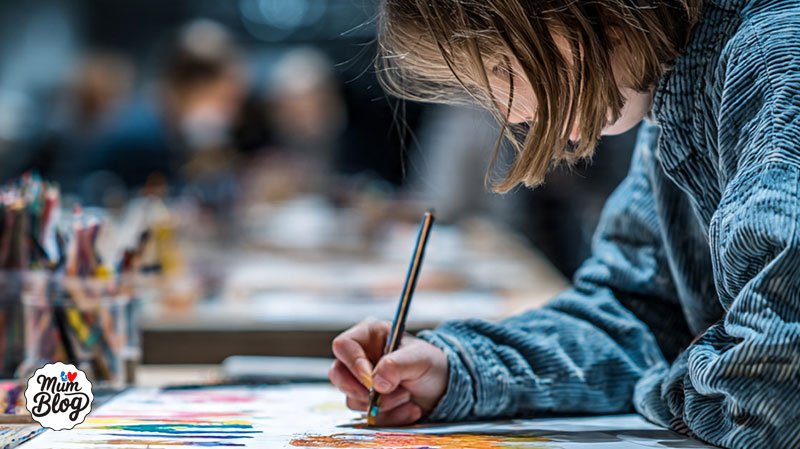
Stickers offer creative potential with almost zero mess. Yes, they stick where you don’t want them sometimes. But they don’t spread, drip, or multiply. Sticker scenes, decorating paper, covering surfaces — endless entertainment from something that stays where it’s put.
Pipe cleaners, pom poms, and similar craft supplies contain themselves. They can be glued, shaped, and combined without liquids or powders spreading everywhere. The cleanup is picking up pieces, not scrubbing surfaces.
Paint Without the Panic
Paint is where fear lives for mess-conscious parents. But several approaches let painting happen without the disaster.
Dot markers are paint’s well-behaved cousin. The paint stays inside the marker until pressed to paper, then makes satisfying dots without drips or spills. Young kids who can’t control brush painting do beautifully with dot markers. The result looks more intentional too, which satisfies kids who get frustrated by mess.
Paint sticks work like giant crayons but produce paint-like coverage. Twist up like glue sticks, apply to paper, dry quickly without drips. More expensive than regular paint but potentially worth it for the sanity savings.
Mess-contained painting setups make regular paint manageable. Tape paper inside a baking sheet with raised edges. Pour tiny amounts of paint into cups that won’t tip (muffin tin works). Use smocks religiously. Have wet wipes within reach. When the container, the child, and the paper are all prepared, paint becomes doable.
Bag painting eliminates mess entirely. Put paint and paper inside a ziplock bag, seal completely, and let kids squish the paint around from outside. They experience color mixing and paint movement without any contact. Tape the bag to a window or table for easier manipulation.
Specific Low-Mess Project Ideas
Some projects are inherently better behaved than others. Build a repertoire of go-to crafts you can pull out without bracing for disaster.
Paper plate crafts contain mess naturally. The plate provides structure and limits the working area. Paper plate animals, masks, sun catchers — endless variations using crayons, markers, stickers, and glued-on materials.
Coloring books and printed coloring pages keep creativity within lines literally. Not every art time needs to be free expression. Sometimes following a coloring page is exactly the right activity — creative but contained, satisfying without chaos.
Cutting and gluing paper pieces works with surprisingly little mess if you prepare. Pre-cut shapes for younger kids or let older kids cut their own. Glue sticks rather than liquid glue. Designated gluing surface. The results — collages, cards, paper chains — require only paper scraps cleanup.
Weaving projects using paper strips, yarn through paper plates with holes punched, or similar techniques engage fine motor skills with minimal mess potential. The materials stay in place as you work with them.
Containing Glitter (If You Must)
Glitter is the most divisive craft supply. Some parents ban it entirely. Others consider it essential for magic. If you’re in the glitter-tolerant camp, containment strategies help.
Do glitter projects inside a large box or container. The child reaches in to work, glitter stays inside the box instead of spreading across the table and floor. A large shallow cardboard box works perfectly.
Glitter glue contains the sparkle inside liquid that stays put until dry. You get glitter effect without loose particles everywhere. The results satisfy glitter-loving kids while keeping glitter where it belongs.
Shake glitter over a paper plate or baking sheet. Tap off excess into the plate. Pour excess back into container. The catch surface prevents spread.
Accept that some glitter will escape despite your best efforts. It’s called craft herpes for a reason. Decide whether the joy justifies the lingering sparkle.
Age-Appropriate Expectations
Mess tolerance should scale with age and ability. What’s appropriate for a ten-year-old differs dramatically from what works with a toddler.
Toddlers (1-2) need the most contained options: chunky crayons, playdough, large stickers, dot markers. Expect short engagement. The exploration of materials is the activity. Our indoor activities guide has more ideas for this age.
Preschoolers (3-5) can handle more supplies with supervision: regular crayons and markers, scissors with help, glue sticks, paint with preparation. They’re developing control but still unpredictable. Stay close.
Early elementary (5-8) can manage increasingly independent crafting. They can help with setup and cleanup. They follow instructions better. You can introduce messier supplies with guidelines they’ll actually follow.
The Cleanup System
Easy cleanup is part of low-mess crafting. Build it into the routine from the start.
Cleanup supplies ready before beginning: wet wipes or damp cloth, garbage nearby, storage containers for supplies. When cleanup is easy, you’re more likely to do crafts again.
Kids help clean up from the youngest ages. Toddlers can throw paper scraps in garbage. Preschoolers can put lids on containers. Elementary kids can actually clean surfaces. Cleanup as part of the activity rather than something you do after they walk away.
Immediate cleanup rather than later. The paint is easier to wipe before it dries. The playdough is easier to sweep before it gets ground in. Do it right away even if it means the craft ends slightly before maximum interest wanes.
Low-Mess Crafts FAQ
My child only wants the messiest possible options. How do I redirect?
Offer choices within acceptable range. Not whether to paint, but dot markers or paint sticks? Not whether to use glitter, but glitter glue or glitter paper? Control the options rather than fighting the desires.
Are low-mess crafts less creative than messy ones?
Not at all. Creativity happens in the mind, not the mess. A child making elaborate playdough worlds or detailed crayon drawings is just as creative as one covered in paint. The materials don’t determine the imagination involved.
My partner/spouse wants to do messier crafts than I can handle. How do we compromise?
Messy projects happen on their watch, with their cleanup. Seriously. If someone wants to do glitter paint projects, they can fully own that experience including the aftermath. Division of labor based on mess tolerance works.
What about crafts at school that come home messy?
School crafts are school’s jurisdiction. Appreciate what they made, display what you can, and don’t feel obligated to replicate the messiest classroom projects at home. Teachers have setup and cleanup systems you don’t.
Making Peace with Mess
Here’s the final truth: some mess is part of childhood creativity. You can minimize it, contain it, prepare for it, and clean it up efficiently. But eliminating it entirely would mean eliminating experiences your kids need and memories worth making.
The goal isn’t sterile crafting. It’s crafting that doesn’t make you dread art time. It’s having supplies you can say yes to. It’s creating the conditions where creativity happens without your home suffering permanent damage.
Here’s my final truth for you: some mess is part of childhood creativity. You can’t eliminate it entirely without eliminating experiences your kids need. But you CAN contain it, prepare for it, and clean it up without losing your mind.
The goal isn’t sterile crafting — it’s crafting that doesn’t make you dread art time. So what’s your biggest craft mess fear? I bet we can solve it together. Grab some playdough, set up your space, and let’s make something beautiful! 🤩
Lila.