Last Updated on October 4, 2026 by Lila Sjöberg
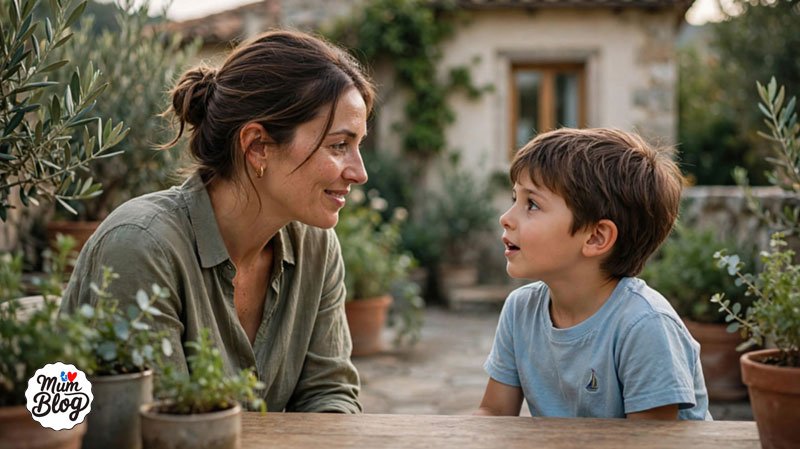
It happened last Tuesday. I was tired, the morning had gone wrong in several directions at once, and I snapped at my youngest over something that was not her fault. She went quiet. I saw it happen in her face, that small closing-off that children do when the adult world has confused them.
I could have moved on. Parents do it all the time. The moment passes, the day continues, and nobody mentions it again. I have done it myself more than I would like to admit. But I stopped, got down to her level, and said: I was wrong to speak to you like that. I am sorry.
She looked at me for a moment with an expression I can only describe as surprised relief. And then she said: it is okay, Mamma. And something in the room shifted.
Most of the resistance parents feel toward apologising to their children comes from a belief, rarely examined, that apologies from parent to child undermine authority. That admitting you were wrong tells your child that you are not in control, that the hierarchy has wobbled, that something important has been lost. This belief is widespread. It is also, as the research makes clear, exactly backwards.
A 2017 study published in the Journal of Counselling and Development surveyed more than 300 parents on their attitudes toward apologising to their children, and measured the quality of parent-child attachment across the sample. The finding was unambiguous: parents who had more positive attitudes toward apologising had significantly more secure parent-child attachment relationships than parents who avoided apologies or felt shame around making them. It was not the apologies that undermined authority. It was the avoidance of them. Children whose parents apologised when wrong reported feeling more, not less, secure in the relationship.
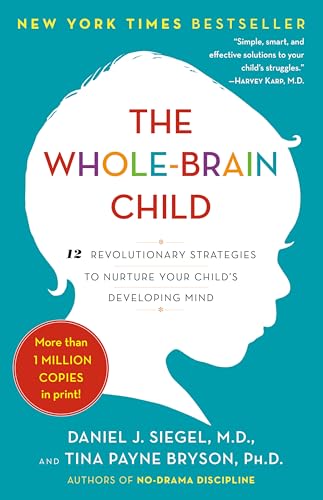
The neuroscience behind this comes from what Daniel Siegel describes as rupture and repair. No relationship, including the parent-child relationship, operates without ruptures. A rupture is any moment when the connection between two people is temporarily broken: a raised voice, an unfair accusation, a moment of distraction when your child needed you and you were not fully present. Ruptures in the parent-child relationship are not pathological. They are inevitable. What matters, Siegel’s research suggests, is not whether ruptures happen but whether they are repaired.
Repair is not the same as moving on. Moving on lets time close over the rupture without addressing it. Repair is active: it names what happened, takes responsibility, and reestablishes the connection. A genuine apology is one of the clearest forms of repair available to a parent. And repeated repair, over the course of childhood, is what builds secure attachment. Not the absence of rupture. The consistent presence of repair.
There is a modelling dimension to this that parents underestimate. Every day, we ask our children to apologise. To a sibling they have hit, to a friend they have hurt, to a teacher they have been rude to. We treat the ability to say sorry as a fundamental social skill, one that requires courage, self-awareness, and the willingness to be uncomfortable in service of the relationship. And then, in many households, the adults exempt themselves from exactly this requirement. Children notice this. They do not always name it, but they notice it. The parent who never apologises is teaching something, just not what they intend. They are teaching that apologies are for people with less power, not more.
What a parental apology actually teaches is the opposite of weakness. It teaches that accountability applies to everyone. That making a mistake is survivable and reparable. That the relationship is strong enough to hold honesty. That you can be wrong and still be worthy of trust. These are not small lessons. They are the architecture of every healthy relationship your child will ever have.
The research also points to something more specific about how apologies work. The single most important element, according to multiple studies on apology effectiveness, is the clear acknowledgment of responsibility. Not “I am sorry you felt that way,” which is not an apology at all. Not “I am sorry, but you did provoke me,” which redistributes the blame. A genuine apology says: I was wrong. Full stop. No qualifications, no redirections, no subtle transfer of responsibility back to the child. The unhedged acknowledgment of fault is precisely what makes the apology land, for children and for adults.
Brene Brown, whose research on vulnerability and shame has shaped a generation of conversations about parenting, puts it simply: “Imperfect parenting moments turn into gifts as our children watch us try to figure out what went wrong and how we can do better next time.” The gift is not the perfection. It is the repair. It is watching an adult they love face a mistake without collapse, without deflection, with only the quiet willingness to be accountable. That is what courage looks like to a child. Not the parent who never gets it wrong. The parent who, when they get it wrong, says so.
My youngest has already forgotten last Tuesday, or so it seems. She has moved on to other concerns, other joys, the complete forward-facing attention that children have that adults spend years trying to recover. But I have not forgotten it. I know that something was repaired in that moment that would otherwise have stayed slightly broken. I know it because I have felt the alternative, in my own childhood and in parenting my own children in the years before I understood this.
The apology is not for you. It is not a performance of your own goodness. It is a concrete act of repair for the child standing in front of you, who deserved better in that moment and knows it, and who will carry the shape of your response into every relationship they ever have.
Get down to their level. Look them in the eye. Say the words.
Parenting is the longest experiment any of us will ever run. I am still reading the results.
Lila Sjöberg
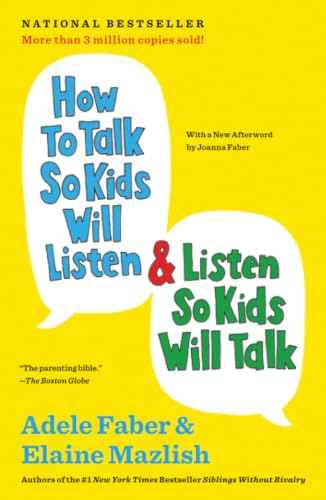
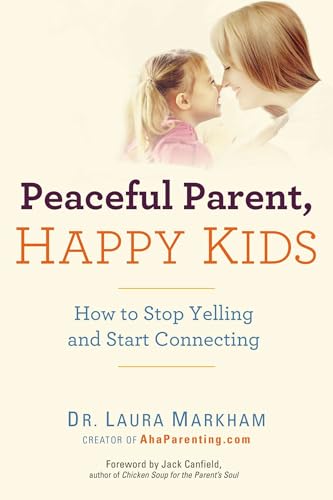
The research goes deeper than one article can cover. These books are worth your time.
Sources
- Florida Institute of Technology. Parental Apologies. Ruckstaetter et al. 2017, Journal of Counselling and Development, attachment outcomes.
- The Wisdom Daily. Six Major Benefits of Apologising to Our Kids. Accountability modelling, anxiety reduction, Brene Brown on imperfect parenting.
- Annie Wright LMFT. Apologising to Your Child: The Ultimate Cycle-Breaking Move. Rupture and repair neurobiology, intergenerational patterns, clinical research.