Last Updated on October 9, 2026 by Lila Sjöberg

Ask any parent what they want their child to be and honesty comes up almost immediately. We say it constantly. Tell the truth. Do not lie to me. Honesty is important. And then we punish them when they tell us something we did not want to hear, and we act surprised when they learn to lie.
The research on children and lying is fairly clear, and fairly uncomfortable. Children do not lie because they are morally deficient. They lie because they have correctly identified that the truth, in certain situations, produces a worse outcome than a well-constructed alternative. They are not broken. They are rational. And the primary variable that determines how much a child lies is not their character. It is how safe they feel telling the truth to the adults around them.
Victoria Talwar, a developmental psychologist at McGill University, has spent years running experiments on children and lying. In one of her most cited studies, she tested children from two different types of schools: one with a strict punishment-based disciplinary culture, and one with a more open, low-punishment approach. The children from the punishment-heavy environment were significantly better liars. They were faster, more convincing, and harder to detect. The environment designed to produce good behaviour had, instead, produced expert deception. The children had not become dishonest because they were allowed to get away with things. They had become dishonest because the cost of honesty was too high.
This finding runs directly against the intuition most parents operate on. We tend to assume that consequences deter bad behaviour, and that lying about bad behaviour deserves an additional consequence on top. What this logic misses is that consequences also deter honesty. A child who knows that admitting to something will result in punishment, anger, humiliation, or a lengthy lecture has been given a clear incentive to avoid admitting it. They are not failing a moral test. They are passing a practical one.
The more significant problem is what fear-based lying does to the relationship over time. A child who cannot tell a parent the truth about small things, a broken rule, a poor grade, a social mistake, will not tell them the truth about large things either. The parent who comes down hard on every disclosure gradually loses access to their child’s actual life. By adolescence, the channel is closed. The teenager is not hiding things out of rebellion. They are hiding things because they learned, over many years of small interactions, that disclosure is dangerous.
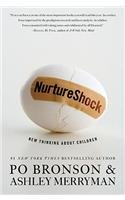
Bronson and Merryman, in their book NurtureShock, describe research showing that the children most likely to tell parents the truth about risky behaviours in adolescence, drug use, sexual activity, dangerous situations, were not the children raised with the strictest rules. They were the children raised in homes where the parent’s reaction to bad news was reliably calm, where the child had learned through experience that telling the truth did not result in an explosion. The parents who shouted the loudest about honesty were, reliably, the last to know what their teenagers were actually doing.
None of this means consequences should disappear. It means the design of those consequences matters enormously. A consequence that teaches a child what to do differently next time is useful. A consequence that teaches a child to hide what happened next time is not. The distinction is not about being soft. It is about understanding what you are actually training for.
The research also points to a specific parenting behaviour that reliably increases honesty: what Talwar calls “the non-judgmental listener.” A parent who, when their child tells them something bad, responds first with curiosity rather than anger, who says “tell me what happened” before “I cannot believe you did that,” trains the child that disclosure is safe. That training compounds. A child who has been met with curiosity a hundred times will reach for honesty as a default, not because they are unusually virtuous, but because honesty has never hurt them.
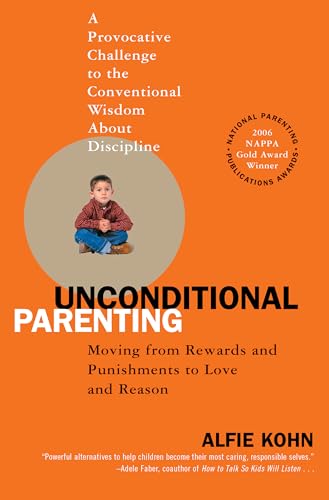
Alfie Kohn makes a related point about conditional love: the parent whose approval visibly depends on the child’s behaviour creates a child who is constantly managing the parent’s emotional state rather than developing their own moral compass. The child learns to perform goodness rather than practice it. Lying is one of the tools of that performance. The goal is not a child who behaves well in front of you. The goal is a child who behaves well when no one is watching, and who comes to you when they do not.
If your child is lying to you regularly, the question worth asking is not what is wrong with them. The question is what they have learned about what happens when they tell you the truth.
The answer to that question is probably the thing that needs to change.
Parenting is the longest experiment any of us will ever run. I am still reading the results.
Lila Sjoberg
The research goes deeper than one article can cover. These books are worth your time.
Sources
- Talwar, Victoria. McGill University. Why Kids Lie and What Parents Can Do About It. Punishment environments, lying skill development, disclosure safety.
- Talwar, V. & Lee, K. Social and Cognitive Correlates of Children’s Lying Behavior. Developmental Psychology. Punishment context, lie sophistication, parental response.
- Psychology Today. Why Kids Lie and What You Can Do About It. Non-judgmental listening, disclosure safety, adolescent honesty patterns.