Last Updated on September 27, 2026 by Lila Sjöberg
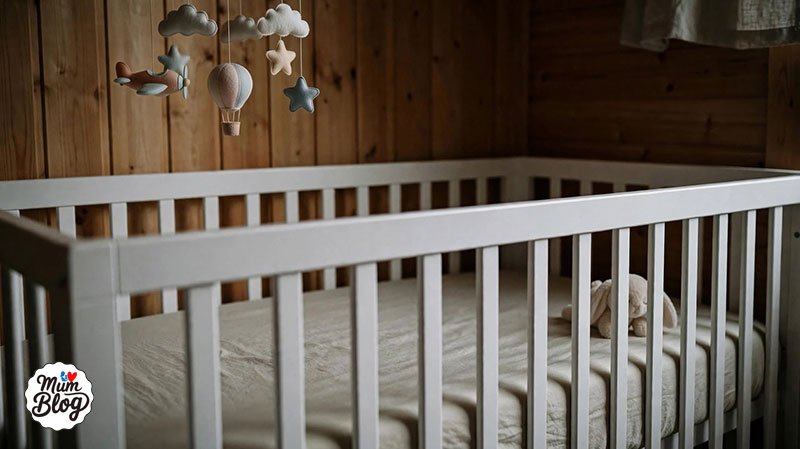
For most of human history, across most cultures on earth, a mother and her newborn slept together. Not in separate rooms, not in separate cribs, not with a monitor on the nightstand. Together, in the same bed, through the night.
This was not a parenting choice. It was simply what happened. The idea of placing a baby alone in a separate room to sleep would have struck most parents throughout history, and most parents alive today outside Western cultures, as not just unusual but alarming. Infants are helpless. They cannot regulate their own temperature. They cannot call for help. The instinct to keep them close through the night is not a modern attachment parenting philosophy. It is a million years of mammalian evolution.
Biological anthropologist James McKenna of the University of Notre Dame has spent more than thirty years studying mother-infant sleep. His research established that when a mother and breastfeeding infant sleep together, their physiological rhythms synchronise. The mother’s breathing and movement influence the infant’s arousals. The infant’s nursing cues influence the mother’s sleep stages. They are, in his words, a single biological system that evolved to function together through the night. The crib disrupts that system. The separate room eliminates it entirely.
So how did we arrive at a world where the American Academy of Pediatrics officially advises against bed-sharing, and where many parents feel genuine guilt or fear about something their grandmothers never thought twice about?
The story begins, as so many modern parenting anxieties do, with a real concern that became a blunt instrument.
SIDS, Sudden Infant Death Syndrome, is real. It is devastating. In the 1990s, as researchers tried to understand it, some studies found correlations between bed-sharing and infant death. The response from medical authorities was swift and categorical: do not sleep with your baby. The Consumer Product Safety Commission launched campaigns. The AAP issued firm guidelines. Cribs were declared the only safe place for infant sleep.
What those early campaigns did not adequately communicate was that the risk was almost entirely concentrated in specific circumstances: parents who smoked, parents who had consumed alcohol or sedating medications, infants placed face-down, or bed-sharing on sofas and recliners rather than firm mattresses. McKenna, who served on the AAP expert panel that produced the recommendations, voted against them. His position, supported by his own laboratory data, was that the blanket prohibition failed to distinguish between unsafe bed-sharing and the kind that, when practiced carefully, carries no measurable increased risk.
The 1994 “Back to Sleep” campaign, which recommended placing babies on their backs rather than their stomachs, was genuinely effective and significantly reduced SIDS deaths. The subsequent prohibition on bed-sharing conflated two very different things: the known danger of prone sleeping and the much more complex question of where babies should sleep. McKenna argues that the one-size-fits-all recommendation showed that Western medical authorities failed to understand what bedsharing actually involves when practiced safely.
The cultural context matters too. The separate nursery is a relatively recent invention, made possible by larger homes, cheaper furniture manufacturing, and a Western ideology of infant independence that is not shared by most of the world. In Japan, where mother-infant bed-sharing is the norm, SIDS rates are among the lowest on earth. In Scandinavia, where I grew up, the picture is more nuanced. We share beds but we also have firm mattresses, minimal bedding, and almost no parental smoking. The risk profile is not the same as in populations where those factors combine differently.
McKenna coined the term breastsleeping in 2014 to describe something specific: a breastfeeding mother and infant sharing a sleep surface free from the known risk factors. His research found that breastsleeping pairs showed distinctive patterns of mutual arousal that may actually be protective. The infant does not sleep as deeply as it would alone. The mother does not sleep as deeply as she would alone. They wake each other gently and frequently throughout the night. This, he argues, is how human infants were designed to sleep.
I am not telling you to share a bed with your baby. I am telling you that the conversation is more complicated than the pamphlet in the maternity ward suggests. The evidence says: do not smoke, do not drink, use a firm surface, keep heavy bedding away from the infant’s face, do not sleep with a newborn on a sofa or recliner. The evidence does not say that a sober, non-smoking mother lying beside her breastfeeding infant on a firm mattress is placing her baby in danger. Those are different statements, and the difference matters.
What the research consistently shows is that parents who are told never to bed-share often end up doing it anyway, exhausted at three in the morning, without having thought through how to do it as safely as possible. The categorical prohibition may be creating more risk than it prevents by leaving those parents without information they could use.
This is a topic where the science and the official guidance do not fully align, where culture shapes what we call natural, and where the right answer for one family is not necessarily the right answer for another. That is not a comfortable place for medical authorities to operate. But it is where the evidence actually sits.
Parenting is the longest experiment any of us will ever run. I am still reading the results.
Lila Sjöberg
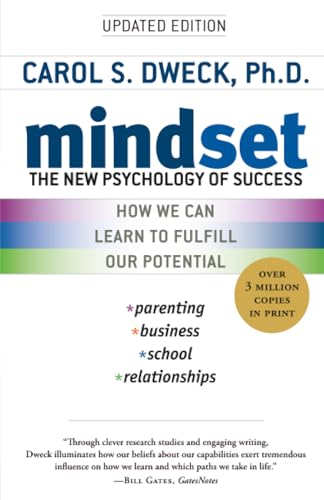
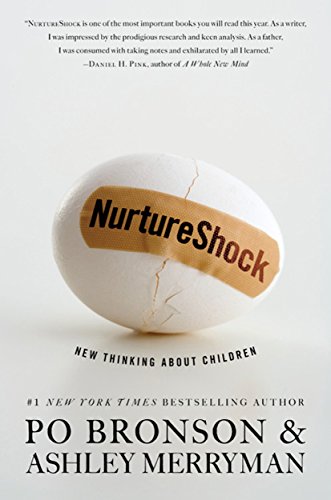
The research goes deeper than one article can cover. These books are worth your time.
Sources
- McKenna, James J. and McDade, Thomas. Why Babies Should Never Sleep Alone. Paediatric Respiratory Reviews, 2005.
- University of Notre Dame News. Infant Co-sleeping Expert Sheds Light on Controversial Practice.
- WBUR CommonHealth. Is It Time to Rethink Co-sleeping? 2013.