Last Updated on October 2, 2026 by Lila Sjöberg

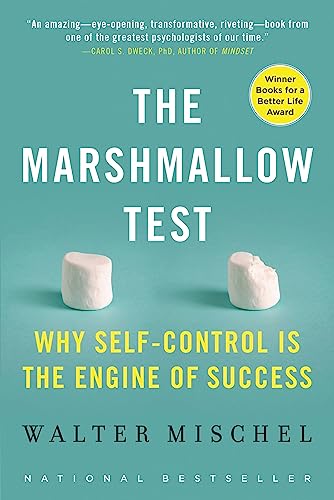
You probably know this experiment. A child sits at a table. A researcher puts a marshmallow in front of them and says: you can eat this now, or you can wait fifteen minutes, and when I come back, you will get two marshmallows. Then the researcher leaves the room.
Children who wait, Walter Mischel found, go on to have higher SAT scores, better health outcomes, lower rates of substance abuse, and more successful careers than children who eat the marshmallow immediately. The story wrote itself: self-control is the character trait that predicts success. Parents who wanted successful children should teach them to wait for the second marshmallow. The test became one of the most cited pieces of research in popular psychology, a staple of TED talks, parenting books, and business leadership seminars.
Then in 2018, Tyler Watts and his colleagues at NYU decided to run it again. Properly this time. With 900 children instead of 90. With families from across the economic spectrum instead of from the Stanford University campus nursery. And the results were uncomfortably different.
Mischel’s original study had a sample problem that nobody had sufficiently examined. The children were recruited from the Bing Nursery School at Stanford University. Their parents were, by definition, Stanford-affiliated. They were overwhelmingly from educated, middle-class and upper-middle-class families. When Watts expanded the sample to include children whose mothers had not completed college, whose families had lower incomes, whose home environments were less stable, the predictive power of the marshmallow test nearly evaporated. Once you controlled for socioeconomic background, a child’s ability to wait for the second marshmallow told you very little about their future outcomes. What it told you, mostly, was what kind of family they came from.
The mechanism that Watts proposed is the one that makes this finding genuinely important for parents. A child who waits for the second marshmallow is not necessarily more disciplined. They may simply live in a world where adults keep their promises. In a stable home, where a parent says they will return and does, where food is reliable and treats are forthcoming, waiting makes rational sense. The researcher said two marshmallows. Two marshmallows will appear. Wait.
In a home where adults are less reliable, where promises are broken more often, where resources are unpredictable, the calculation changes entirely. Eat the marshmallow now. You cannot be certain it will still be there, or that the promise of two will be kept. This is not a failure of self-control. It is an accurate reading of the environment. The child who grabs the marshmallow in an unstable home may be displaying better judgment than the child who waits in a stable one.
Researchers who followed up on this framing pointed to work on scarcity psychology, particularly the research of Sendhil Mullainathan and Eldar Shafir, which showed that cognitive bandwidth is itself a limited resource, and that people living under conditions of scarcity, financial stress, food insecurity, housing uncertainty, use more of that bandwidth managing immediate problems, leaving less available for long-term planning and impulse control. Self-control is not a fixed character trait that some children are born with and others are not. It is partly a function of how much cognitive space a person has available, and how safe they feel in their environment. Telling a child from a stressful home that they need more self-control is like telling someone treading water that they need to swim more efficiently.
None of this means self-control is unimportant. Mischel himself spent his career studying not just whether children could delay gratification, but how they did it. His research showed that children who waited successfully tended to use specific strategies: they looked away from the marshmallow, they distracted themselves, they pretended it was a picture rather than a real object. These are teachable skills. The ability to redirect attention, to reframe a situation, to reduce the emotional salience of an immediate temptation is genuinely useful across many areas of life.
What the 2018 replication changed is the story we told about what that skill predicts and where it comes from. The original story was essentially a moral one: children with self-control are rewarded with success because they deserve it. The revised story is more complicated and more honest: children who demonstrate self-control in a laboratory setting are often children whose environments have given them good reasons to trust that waiting pays off. The marshmallow test was, in large part, a measure of privilege that looked like a measure of character.
As a parent, I find this both uncomfortable and clarifying. The instinct to teach children to delay gratification is not wrong. Patience, persistence, and the ability to work toward a goal that is not yet visible are genuinely valuable. But the research suggests that the most powerful thing I can do to develop those capacities is not to run marshmallow drills. It is to be reliable. To keep promises. To make my children’s world predictable enough that waiting for things makes sense to them, because they have reason to believe the wait will be worth it. The marshmallow test was never really about the marshmallow. It was about trust.
The second marshmallow was always a test of the environment as much as the child. We just did not see it that way for fifty years.
Parenting is the longest experiment any of us will ever run. I am still reading the results.
Lila Sjöberg
The research goes deeper than one article can cover. These books are worth your time.

Sources
- Psychological Science. A New Approach to the Marshmallow Test Yields Complicated Findings. Watts, Duncan, Quan 2018 replication study details.
- Gigazine. The Marshmallow Test: What Does It Really Measure? Socioeconomic replication findings, sample bias in original study.
- Ecoticias. Is the Marshmallow Test Just a Measure of Affluence? Trust and environment as the underlying variable, what the test actually predicts.