Last Updated on January 25, 2026 by Lila Sjöberg
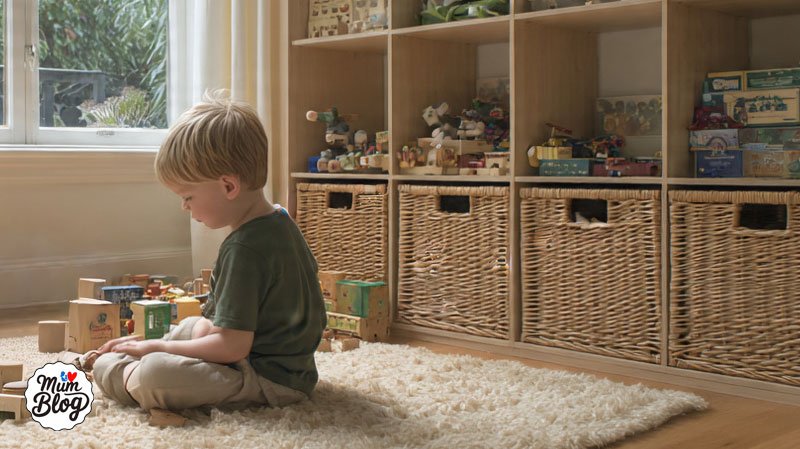
Let me guess — you’ve seen those beautifully organized playroom photos and thought, “Why can’t mine look like that?” I’ve been there, standing in my own toy explosion, wondering what I’m doing wrong. But here’s what I finally realized: those photos are styled. Those spaces aren’t actively used by real children who dump, scatter, and create glorious chaos daily. Once I stopped chasing that impossible standard and started organizing for how my kids actually play? Everything changed. Want to know what really works in the real world?
Key Takeaways
The best playroom organization matches how your specific children actually play, not how organizing experts think they should play. Fewer toys visible at once leads to more play and easier cleanup — rotation systems work better than displaying everything. Kid-accessible storage is essential; if they can’t reach it or open it, they can’t maintain it. Perfect organization is unsustainable with active children; functional organization that can be restored in ten minutes is the real goal.
The Short Answer
Organize based on your children’s actual behavior, not an ideal. Reduce visible toys through rotation, use open bins at kid height for daily items, establish a quick cleanup routine, and accept that lived-in order looks different from styled photos.
The Maintenance Reality
Before buying a single bin, understand this: any organization system must be maintainable by the smallest person expected to use it. Elaborate systems that require adult intervention to restore defeat their purpose.
This means open containers rather than lidded ones for daily toys. It means low shelves rather than high ones. It means categories broad enough that a three-year-old can execute them — all the cars go here, not sorted by type, size, and color into separate labeled containers.
The ten-minute test determines viability: can this room be restored to functional order in ten minutes or less? If not, simplify the system until it can. Daily chaos is inevitable. Daily impossible cleanup is optional.
The Rotation Revolution
The most transformative playroom change isn’t better containers — it’s fewer visible toys. Rotation systems keep some toys in use while others wait in storage. Children play more deeply with less available, and cleanup becomes manageable.
Divide toys into three or four groups. Keep one group accessible, store the rest in closets, basement, or wherever out of sight works. Rotate every few weeks. The reappearing toys feel new again. The reduced daily chaos feels like magic.
Rotation also reveals what they actually play with. Toys that go unnoticed through multiple rotations can probably be donated. Toys they ask for specifically when packed away deserve permanent accessibility. Their behavior tells you what matters more than your assumptions.
Storage That Works
Effective toy storage is defined by one criterion: can kids put things away themselves? Everything else is secondary.
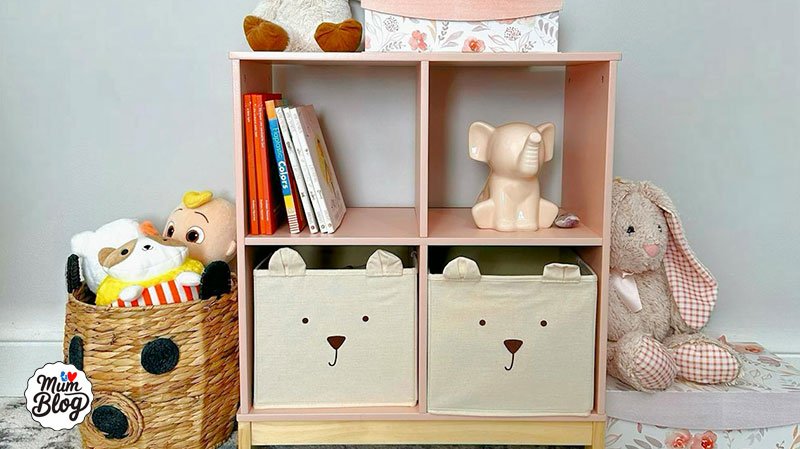
Open bins at floor level handle the majority of toys. Not beautiful clear containers with matching labels — actual functional bins that kids can dump toys into without precision. Cube storage with fabric bins works. Basic plastic bins work. The specific vessel matters less than the accessibility.
Designate broad categories that make sense to children. All vehicles. All dolls and figures. All building toys. All art supplies. Maybe all small things that don’t fit elsewhere. These categories are retrievable by kids and don’t require adult supervision to maintain.
Puzzle and game storage requires more intention because pieces matter. Shelving where boxes sit flat and visible works better than stacking where bottom games never get played. For puzzles with missing-prone pieces, gallon ziplocks with the puzzle picture cut from the box work better than original boxes.
Books at kid height, covers visible when possible. A front-facing bookshelf for younger kids, spine-out shelving for older kids with more books. The key is accessibility — books they can reach and choose independently get read more.
Zone Thinking
If space allows, zones create clarity about what happens where. Not rigid boundaries, but general areas that contain specific types of play.
A reading corner with comfortable seating, good light, and accessible books invites reading time. This can be as simple as a beanbag next to a bookshelf or as elaborate as a built-in nook.
A creativity zone with art supplies, table surface, and easy-clean flooring contains the mess and provides the invitation. When materials are ready and accessible, creative play happens more.
Active play area — if you have space for larger toys like play kitchens, riding toys, or climbing structures — works best in its own area where movement can happen without bumping into focused play.
Floor space in the center remains flexible. This is where block towers rise, train tracks spread, and imaginative worlds build. Protecting empty floor space is organizing too.
The Daily Cleanup Routine
Organization systems mean nothing without maintenance habits. Building cleanup into daily rhythm matters more than the container selection.
End-of-day pickup becomes normal when it’s predictable and supported. A song that plays during cleanup, a timer that gamifies speed, or simply the same time each evening — consistency creates habit. Kids as young as two can participate at their level.
Make cleanup possible by limiting how much is out. A room with eighty accessible toys overwhelms everyone. A room with twenty accessible toys cleans up in minutes. Rotation systems do double duty here.
Model the process, especially with young children. Clean alongside them rather than issuing orders from elsewhere. Show where things go repeatedly. Habit builds through repetition, not instruction.
Perfect isn’t the goal — functional is. Everything doesn’t need to be in its precise spot. Everything needs to be off the floor and in the general vicinity of where it belongs. That’s good enough.
Common Problem Spots
Certain toy categories create consistent challenges. Solutions exist if you think specifically about the problem.
Small pieces (LEGO, tiny figurines, game components) — contain in bins that are accessible but not dumpable. Large ziplock bags inside a larger container work. So do tackle boxes or craft storage containers with compartments. Our building toys guide has more storage solutions.
Stuffed animals multiply mysteriously. A hanging net in the corner corrals them. A bean bag cover that stuffs with animals serves double purpose. Regular donation of ones they don’t actually play with prevents overflow.
Dress-up clothes need accessible but contained storage. A trunk or bin they can dig through works better than hung organization for young kids. A mirror nearby enhances the play.
Art supplies spread and get lost. A caddy or container that holds everything needed comes to the table and returns to its spot. Closed storage prevents dried-out markers and lost crayons.
When Organization Isn’t the Problem
Sometimes the issue isn’t storage — it’s volume. No organizing system compensates for having too much stuff. Decluttering creates space for systems to work.
Broken toys, toys with missing pieces, toys that haven’t been touched in months — these can go. Outgrown toys, duplicates of similar items, toys that only frustrate — donate or discard. Less stuff means less to organize, less to clean up, and often more actual play.
Before birthdays and holidays, preemptively create space by removing items that have run their course. New things replacing old things maintains equilibrium. New things adding to old things creates overflow.
Playroom Organization FAQ
How do I get my kids to actually put toys away?
Make it physically possible (accessible containers), keep expectations reasonable (broad categories, not precision), make it routine (same time daily), and do it with them (especially when young). Consistency over time builds habit. Expecting immediate compliance leads to frustration.
Should playrooms be separate from living spaces?
Ideal versus reality. If you have a dedicated playroom, great. If toys live in living areas, contained zones and closed storage help maintain sanity. Many families with young children accept that toys in common spaces is temporary, and that’s fine.
What about toys with a million pieces?
Contain them in closed systems that stay together. If pieces constantly go missing and it frustrates rather than engages, consider whether that toy has run its course. Some toys aren’t worth the management they require.
My organized playroom lasts approximately four minutes. What am I doing wrong?
Nothing. A playroom in active use gets messy. That’s play happening. The question isn’t whether it stays organized but whether it can be restored to order reasonably quickly. If restoration feels impossible, simplify the system or reduce the volume.
Good Enough Order
The goal of playroom organization isn’t Instagram perfection. It’s creating conditions where play can happen, cleanup is possible, and the space feels manageable rather than overwhelming.
That looks different in every home. It changes as children grow. It requires periodic reassessment as toys accumulate and interests shift. The perfect system doesn’t exist — the workable system evolves.
Start where you are. Remove what’s not working. Simplify until cleanup is achievable. Maintain what you can, accept what you can’t, and remember that the point of a playroom is play — not pristine shelves photographed for strangers’ approval.
Your messy, lived-in, regularly-restored-to-functional-order playroom is exactly what it should be: a space where childhood happens. Complete with all the beautiful chaos that entails. Perfect organization isn’t the goal — workable organization is. The kind that can be restored in ten minutes. The kind that your kids can actually maintain. The kind that serves play rather than restricting it. So tell me, what’s your biggest playroom struggle? I bet there’s a solution simpler than you think. You’ve got this, mama — one toy bin at a time.
Lila.