Last Updated on September 29, 2026 by Lila Sjöberg
The rule is familiar. One hour of screen time per day for children aged two to five. No screens before 18 months except video calls. High-quality programming only. It appears on parenting websites, in school newsletters, in pediatrician waiting rooms. Most parents who follow it believe it is backed by solid science.
The science it is backed by is considerably weaker than that.
This is not an argument for unlimited screen time. It is an argument for understanding what the research actually shows, which is different from what the guidelines imply, and importantly different from the certainty with which those guidelines are typically communicated.
The one to two hour daily limit comes from the American Academy of Pediatrics, which first issued screen time guidelines in 1999. Those guidelines were based on expert opinion and existing research, which at the time was sparse. The AAP has revised the guidelines multiple times since then, most recently in 2016, acknowledging that a one-size-fits-all approach is not ideal. The guidelines are now more nuanced than they once were. But the headline number, one to two hours, persists in popular culture and parenting advice long after the research landscape has complicated it significantly.
The most rigorous challenge to the guidelines came from Oxford University researchers Amy Orben and Andrew Przybylski. In a 2019 paper published in Psychological Science, they analysed data from three large studies involving hundreds of thousands of adolescents. Their finding was striking: the association between screen time and wellbeing was real but so small as to be practically meaningless.
To illustrate the size of the effect, they calculated how many additional hours of screen time per day a teenager would need to experience a noticeable decline in wellbeing. The answer was more than 63 hours per day, which is of course impossible. The correlation they measured was technically significant but practically negligible. Orben and Przybylski compared the effect size of screen time on wellbeing to the effect of wearing glasses (also technically negative for wellbeing by their measures) and eating potatoes (similar magnitude). Both the glasses and potatoes comparisons were deliberately provocative, designed to show that the measured effect, while real, tells us very little.
Przybylski led a separate study drawing on nearly 20,000 telephone interviews with parents of children aged two to five. This study tested specifically whether following the AAP guidelines produced measurable psychological benefits. The results showed no consistent correlation between following the guidelines and children’s wellbeing. Children whose screen time was limited in line with AAP recommendations showed slightly higher resilience, but this was offset by lower positive affect. The overall wellbeing picture was essentially flat. Following the guidelines, the data suggested, was not producing the intended outcome.
“Our findings suggest that there is little or no support for the theory that digital screen use, on its own, is bad for young children’s psychological wellbeing,” Przybylski concluded. What his research consistently pointed toward instead was the importance of context: whether parents were engaged with their children during screen time, the quality of what was being watched or played, the overall family environment. The raw number of minutes was not the meaningful variable.
This does not mean screens are harmless. There is credible evidence that passive, solitary, low-quality screen use late at night disrupts sleep. There is evidence that social media use affects some teenagers, particularly girls, in negative ways that are not fully understood. The field is genuinely contested, with serious researchers on both sides of the debate, and the honest answer is that we do not yet know the full picture.
What the research does show clearly is that the specific number, one hour or two hours per day, does not have strong empirical support as a threshold. The AAP guidelines were created partly to give parents a simple, communicable rule, which is understandable from a public health perspective. Simple rules are easier to follow and easier to communicate than nuanced guidance about context and quality. But the simplicity of the rule has led many parents to believe there is more certainty behind it than actually exists.
I have three children. I have felt the guilt of a screen going on for longer than the guidelines permit. I have watched the clock when it did not need watching. What the research has taught me is not that screens are fine in any quantity, but that my energy was being spent on the wrong question. The right questions are: what are they watching? Are we watching it together sometimes? Are screens replacing physical play, sleep, or conversation, or are they a supplement to those things? Are my children anxious, curious, connected, sleeping well?
One hour versus two hours, tracked on a timer, turns out to be less important than almost any of that.
Parenting is the longest experiment any of us will ever run. I am still reading the results.
Lila Sjöberg
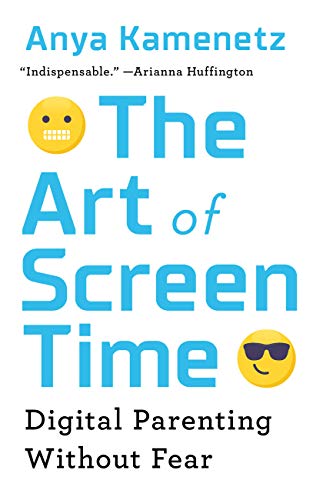
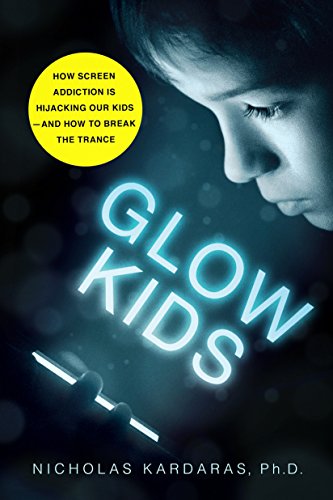
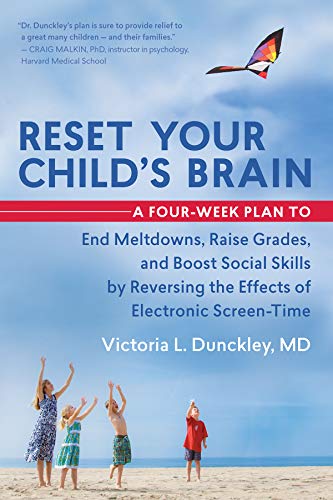
The research goes deeper than one article can cover. These books are worth your time.
Sources
- University of Oxford. Children’s Screen-Time Guidelines Too Restrictive, According to New Research. Przybylski and Weinstein, Child Development, 2017.
- British Psychological Society. Link Between Teens’ Time on Digital Devices and Lower Wellbeing Too Small to Merit Concern. Orben and Przybylski, Psychological Science, 2019.
- Fatherly. New Data Points to Benefits of Moderate Screen Time for Kids. AAP guidelines critique and Przybylski research summary.