Last Updated on May 3, 2026 by Lila Sjöberg
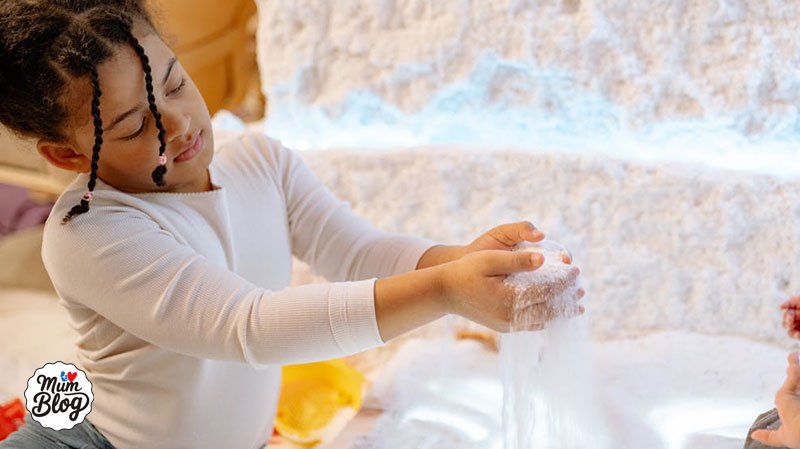
Sensory play sounds fancy, but it’s really just hands-on exploration that engages touch, sight, sound, smell, or taste. It’s also one of the most effective ways to keep kids occupied while genuinely supporting their development. From babies mouthing everything to elementary schoolers who still love slime, here’s how to do sensory play right at every stage.
Key Takeaways
Sensory play builds neural connections, develops fine motor skills, and supports language development through hands-on exploration. Every age needs sensory input, but what’s safe and engaging changes significantly as kids grow. Babies need taste-safe options since everything goes in their mouths; toddlers need contained messes; older kids can handle more complex materials and longer focus times. Most sensory materials come from your pantry or dollar store — you don’t need specialty products. Sensory play is naturally calming for many children and can help with emotional regulation during tough moments.
The Short Answer
Sensory play should match your child’s developmental stage: taste-safe materials for babies, supervised exploration for toddlers, and increasingly complex materials with more independence for older children. The core principle stays the same — engaging multiple senses through hands-on play builds brains better than passive activities.
Why Sensory Play Matters
When kids squish, pour, dig, and explore with their hands, their brains light up. Sensory experiences build neural pathways that support everything from language development to emotional regulation to mathematical thinking. Children who get regular sensory play opportunities tend to have better fine motor control, longer attention spans, and stronger problem-solving skills.
Sensory play is also remarkably calming for many children. The repetitive, absorbing nature of pouring rice or squishing playdough activates the parasympathetic nervous system. This is why sensory bins often work magic on dysregulated kids — and why many adults find similar activities soothing.
Sensory Play for Babies (0-12 Months)
Everything is sensory play for babies. They’re experiencing the world through their senses for the first time, and everything is new and fascinating.
Safety first: Babies mouth everything, so all materials must be taste-safe and large enough to prevent choking. Supervise constantly.
Texture exploration: Gather items with different textures — smooth wooden blocks, bumpy rubber balls, silky fabric scraps, crinkly paper. Let baby touch, mouth, and explore each one.
Water play: Bath time is prime sensory time. Add floating toys, pouring cups, or just let baby splash. A shallow bin of water during tummy time (with constant supervision) works outside the bath too.
Edible sensory bins: Cooked pasta, O-shaped cereal, or mashed banana spread on a tray. Baby can squish, grab, and taste safely. Messy but effective.
Sound exploration: Containers with different items inside (rice, bells, crinkle paper) make different sounds when shaken. Baby discovers cause and effect while engaging hearing.
Sensory Play for Toddlers (1-3 Years)
Toddlers have the motor skills to really dig in but still need supervision and taste-safe options for younger ones. This age is sensory play prime time.
Classic sensory bins: Dry rice, dry beans, oats, kinetic sand, or water with scoops, cups, funnels, and small toys to discover. Contain the mess with a large bin and towel underneath.
Playdough: Homemade or store-bought, playdough is the ultimate toddler sensory tool. Add cookie cutters, plastic knives, rolling pins, and random kitchen gadgets. The squishing is inherently calming.
Cloud dough: Mix 8 cups flour with 1 cup baby oil for a moldable, silky texture that’s different from playdough. Messy but magical.
Water table or bin: Add dish soap for bubbles, food coloring for color mixing, or ice cubes for temperature exploration. Water play holds toddler attention remarkably well.
Sensory bottles: Clear bottles filled with water, oil, glitter, beads, or small objects. Sealed tight (glue the cap) so they’re safe to shake and watch. Good for calming and independent play. Our indoor activities guide has more detailed instructions for these.
Sensory Play for Preschoolers (3-5 Years)
Preschoolers can handle more complex materials and longer focus times. They’re also old enough to understand rules about keeping materials in the bin.
Themed sensory bins: Move beyond basic materials to narrative bins — a construction site with rocks and toy trucks, an ocean with blue water beads and sea creatures, a farm with dried corn and animal figures. Stories emerge naturally.
Slime: The holy grail of preschool sensory play. Basic slime (glue, contact lens solution, and baking soda) or variations like fluffy slime or butter slime offer different textures. Supervise to ensure it stays play, not carpet decoration.
Oobleck: Cornstarch and water make a non-Newtonian fluid that’s solid when you squeeze it, liquid when you don’t. Science and sensory play combined. Endlessly fascinating.
Shaving cream play: Spread on a tray or table for drawing, writing, and squishing. Add food coloring for color mixing exploration. Easy cleanup with a scraper and wipe.
Nature sensory: Collections from outside — pinecones, leaves, flowers, rocks, sticks — sorted, explored, and incorporated into play. Free and connects them to the natural world.
Sensory Play for Big Kids (5-8+ Years)
Older kids haven’t outgrown sensory needs — they’ve just outgrown some materials. Slime remains relevant. New challenges emerge.
Advanced slime and dough recipes: Let them follow recipes independently. Butter slime, cloud slime, galaxy slime, kinetic sand from scratch. The making is as engaging as the playing.
Science experiments: Many experiments are sensory at their core — volcanoes, crystal growing, density towers, ice excavations. Frame it as science; it’s still hands-on exploration.
Art materials: Clay that air-dries or needs baking, textured art projects, fabric crafts. Creative mediums that engage touch while producing something they’re proud of.
Cooking and baking: Kneading dough, mixing batters, decorating — cooking engages all senses and produces edible outcomes. Independence in the kitchen grows with age.
Building with varied materials: Not just blocks — cardboard, tape, clay, wire, fabric. Multi-sensory creation that challenges engineering skills.
Setting Up for Sensory Success
Sensory play works better with some structure. A few guidelines prevent chaos:
Contain the mess: Use large bins, put towels or shower curtains underneath, designate an easy-clean area. Expecting mess and preparing for it reduces your stress.
Set clear boundaries: The rice stays in the bin. Playdough stays at the table. Rules can be simple but need to be consistent.
Limit materials: Too many tools overwhelm. Start with the base material and two or three tools. Add more only if interest wanes.
Prep in advance: Having a bin ready to grab transforms a boring moment into engaged play. Prep during nap time or after bedtime.
Rotate materials: Same bin gets boring. Swap the material or theme every week or two to maintain interest.
Sensory Play FAQ
My child hates getting messy. Should I push sensory play?
Never force it. Start with dry, contained materials (kinetic sand, dry rice) and tools that keep hands clean (spoons, scoops). Let them observe first. Some kids warm up slowly. Some always prefer cleaner play — that’s okay. Offer opportunities without pressure.
What’s the easiest sensory activity with minimal cleanup?
Kinetic sand in a contained bin or playdough at a table. Both offer great sensory input without spreading everywhere. Water beads are also contained if you use a bin with high sides. Sensory bottles require zero cleanup after initial creation.
How do I do sensory play with multiple ages?
Set up side-by-side bins with age-appropriate materials, or use one material with different tools — baby gets large scoops, toddler gets funnels and cups, preschooler gets small figurines and more complex tools. Supervise to keep small objects away from babies.
Is store-bought sensory material worth it?
Some are. Kinetic sand has a unique texture that’s hard to replicate. Water beads are cheap and fascinating. But many materials (slime, playdough, cloud dough, sensory bins) work just as well homemade and cost less. Try DIY first. You can also check these offers from Amazon.
My child just dumps everything immediately. How do I extend play?
Dumping is age-appropriate for young toddlers — that’s the play. For older kids, try adding narrative elements (hiding toys to find), specific challenges (fill this cup exactly to the line), or tools that require focus (tweezers, pipettes). Sometimes limiting materials forces more creative play with what’s available.
Start Simple
A bowl of dry rice and some measuring cups is sensory play. Water in the tub is sensory play. Playdough on the table is sensory play.
Start with what you have. Notice what your child gravitates toward. Build from there. The goal isn’t elaborate themed bins with color-coordinated accessories. It’s hands exploring, brains building, and kids engaged in play that actually supports their development. Everything else is optional.
Lila.