Last Updated on October 6, 2026 by Lila Sjöberg
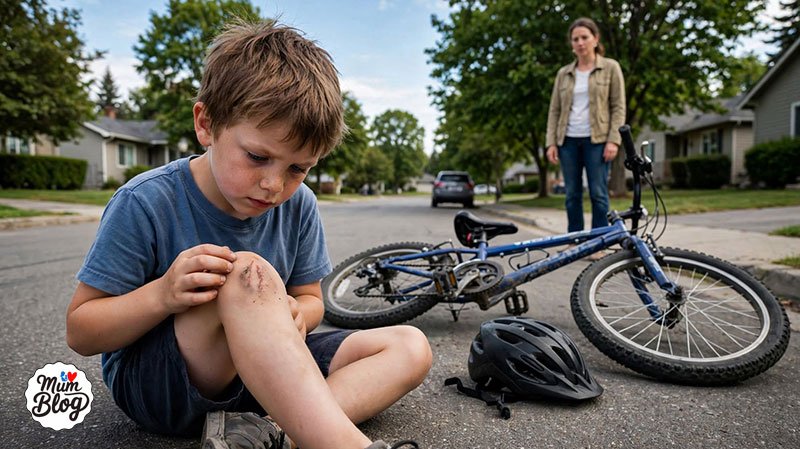
My youngest fell off her bicycle last summer. Not badly, just the ordinary tumble that comes with learning, a scraped knee, a bruised confidence, a moment of sitting on the pavement working out whether to cry. I was standing a few metres away. Every instinct I had said: go to her, fix it, make it better.
I did not move. I waited.
She looked at her knee. She looked at the bicycle. She got up, picked it up, and got back on. She was riding again inside two minutes. And something in her face, when she looked back at me, was different from the face she had before the fall.
This is not a story about toughening children up. It is a story about what failure actually does to a developing brain, and why the research on this subject is considerably more specific than the general advice about resilience suggests.
Nicole Perry and her colleagues at the University of Minnesota tracked 422 children across an eight-year longitudinal study beginning when the children were two years old. The study specifically examined what happened to children whose parents were highly controlling during toddlerhood, managing their play, solving their problems for them, directing their activities rather than allowing independent exploration. The findings were striking. Children of overcontrolling parents had measurably less self-regulation at age five. And by early adolescence, they were at increased risk of emotional and behavioural difficulties. The protective effect of the close parental oversight did not transfer once the children faced situations their parents could not control. The children had never been given the chance to develop their own regulatory capacity, because their parents had always done it for them.
The University of Warwick, examining data from the Nuffield Foundation on how modern childhood has changed, found something that should give every well-intentioned parent pause. On nearly every objective indicator, children’s lives have improved: more pocket money, less homework, better academic performance, fewer accidents, more parental involvement. Children today fail less often than children did forty years ago. And yet by multiple measures of psychological wellbeing, they are not doing better. They are doing worse.
Professor Dieter Wolke, who led the Warwick research, put it plainly. “Children face fewer challenges, they fail less often and are protected by their parents, but this protective effect gets lost once they leave the home, and they have to cope with all of the normal tasks of life.” The skills that adversity builds, the ability to tolerate frustration, to recover from setbacks, to persist when something is hard, do not develop in the absence of adversity. They develop through it. And the window for building those skills, research suggests, is earlier than most parents assume.
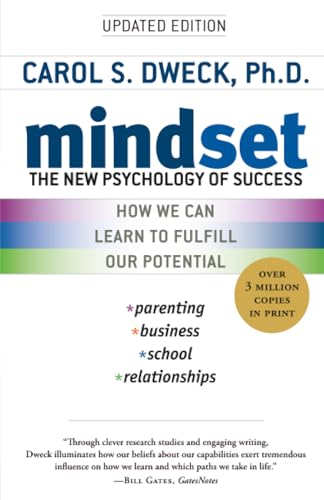
Carol Dweck’s work on mindset is the piece of this research most parents have encountered, but often in a simplified form. The core finding is real and important: children who understand that ability is developed through effort and practice rather than fixed at birth, what Dweck calls a growth mindset, show more persistence, greater academic achievement, and better recovery from setbacks than children who believe that failure reflects a permanent limit on what they can do. What the popular version of Dweck’s work sometimes misses is the mechanism. A growth mindset does not develop from being told that effort matters. It develops from experiencing situations where effort, applied after failure, actually produces improvement. The lived experience of failing, trying again, and succeeding is the evidence from which the growth mindset is built. Without the failure, there is no evidence. Without the evidence, the mindset is just a phrase.
The practical implication of this research is uncomfortable for most parents, because the discomfort of watching your child struggle is real and immediate, while the developmental benefit of that struggle is abstract and delayed. When a child is sitting on the pavement next to a fallen bicycle, the case for not rushing over has to be made in the abstract, against the very concrete case that your child is hurt and you can help.
The research does not say never help. It says that the reflexive rescue, the intervention before the child has had a chance to attempt their own solution, consistently produces worse outcomes than the patient wait. Jessica Lahey, whose book The Gift of Failure draws on both research and her experience as a teacher, describes watching a student struggle with a locker combination for several minutes before asking for help. The teacher who intervenes immediately produces a child who cannot open a locker. The teacher who waits produces a child who can. The same principle scales from lockers to friendships to careers.
The research on risky play makes a similar point from a different angle. Studies published in Developmental Psychology show that children who are allowed to engage in moderately risky physical play, climbing, jumping, rough and tumble, demonstrate stronger problem-solving skills and lower anxiety than children whose physical activities are heavily supervised and restricted. The key word is moderate. The research is not arguing for recklessness. It is arguing that the experience of navigating genuine physical uncertainty, making a judgment, taking a risk, and finding out what happens, builds cognitive and emotional capacities that protected play cannot replicate.
I think about the bicycle often. I think about what would have happened if I had run over, carried her inside, cleaned the knee, and suggested she try again another day. She would have been fine. She would have got back on the bicycle eventually. But she would not have had that particular two-minute experience of working out, on her own, that she could do it. And that experience, multiplied across thousands of small moments across a childhood, is apparently what resilience is actually made of.
It is not made of inspirational posters. It is not made of reassurance. It is made of falling off the bicycle, sitting with the discomfort of having fallen, and getting back on.
I am still learning when to step back. It is the hardest thing parenting has asked of me.
Parenting is the longest experiment any of us will ever run. I am still reading the results.
Lila Sjöberg
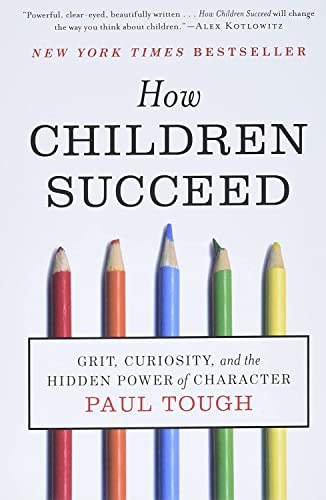
The research goes deeper than one article can cover. These books are worth your time.

Sources
- Children’s Dayton. Is Your Parenting Style Affecting Your Children? Nicole Perry 8-year longitudinal study, overcontrolling parents and self-regulation outcomes.
- University of Warwick. Time for Parents to Power Down: Why Coddling Children Can Harm Them. Professor Dieter Wolke, Nuffield Foundation data, modern childhood wellbeing paradox.
- Psychology Today. Why Helicopter Parenting Fosters Failure. Growth mindset, Wendy Grolnick research, autonomous motivation and academic outcomes.