Last Updated on October 2, 2026 by Lila Sjöberg

If you have siblings, you have probably heard some version of this: firstborns are responsible and high-achieving, middle children are diplomatic and overlooked, youngest children are charming and rebellious. It feels true. It maps onto families you know. Someone at a dinner party says it and everyone nods, because everyone can think of an example that fits.
This is called confirmation bias, and it is one of the most reliable features of the human brain. We remember the examples that fit. We forget the ones that do not. The theory of birth order and personality has been running on this fuel for over a century, and it feels so intuitively right that most people have never stopped to ask whether the research actually supports it.
It does not. Not really. And the story of why people kept believing it anyway is almost as interesting as the research itself.
The idea that birth order shapes personality traces back to Alfred Adler, the Austrian psychologist who broke with Freud in the early 20th century and spent his career developing what he called Individual Psychology. Adler believed that the position a child occupied in the family sequence fundamentally shaped their character: firstborns, initially the centre of attention, experience displacement by later siblings and develop a drive to reclaim status through achievement. Middle children, perpetually sandwiched, develop diplomacy and social skill. Youngest children, never displaced, grow up charming and creative. Only children, never competing, develop a different set of problems entirely. The framework was elegant, intuitive, and very difficult to test rigorously. That did not stop it from becoming enormously influential.
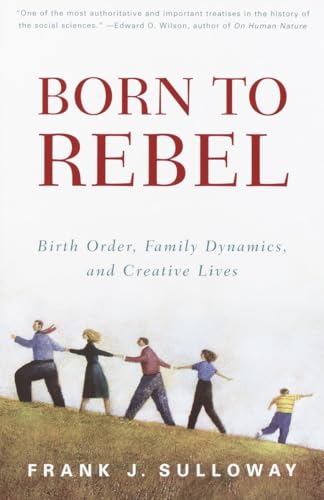
Frank Sulloway revived and expanded the theory in his 1996 book Born to Rebel, which argued that firstborns are evolutionarily predisposed to support the established order while later-borns are predisposed to challenge it. The book was a bestseller and generated enormous academic discussion. It also generated, over the following two decades, a cascade of studies attempting to test its claims.
Here is where it gets uncomfortable for the theory. Two independent studies published in 2015, one analysing data from over 20,000 Americans, the other drawing on over 10,000 British and German participants, tested the effect of birth order on the Big Five personality traits: extraversion, agreeableness, conscientiousness, neuroticism, and openness to experience. Both studies found essentially zero effect. Not a small effect. Not an effect that requires careful interpretation. Zero. Birth order, when you measure personality properly with large representative samples, does not predict personality traits in any consistent, measurable way.
The reason earlier studies showed effects turns out to be a methodological problem that is almost embarrassing once you see it. Many birth order studies asked family members to rate each other’s personalities. And it turns out that when you put a family together, everyone plays their family role. The responsible firstborn becomes more responsible. The rebellious youngest becomes more rebellious. The researchers were not measuring stable personality traits. They were measuring how people perform their family identity when surrounded by the people who gave them that identity in the first place. When strangers rated the same people, the birth order effects largely disappeared. The effect was real inside the family. It was not real outside it.
There is also the family size problem, which researchers have known about for decades but which popular accounts of birth order consistently ignore. Being a firstborn in a family of two is a completely different experience from being a firstborn in a family of six. The two children share a birth order position but almost nothing else about their family environment. When you control for family size, birth order effects shrink further or disappear entirely.
So what actually shapes personality? The research points to three things with considerably more confidence than it points to birth order.
The first is genetics. Behavioural genetics research consistently estimates that roughly half of personality variation between people is attributable to genetic factors. This does not mean personality is fixed at birth, but it does mean that a significant portion of who your child is comes from who they were always going to be, before anything you did or did not do had a chance to operate.
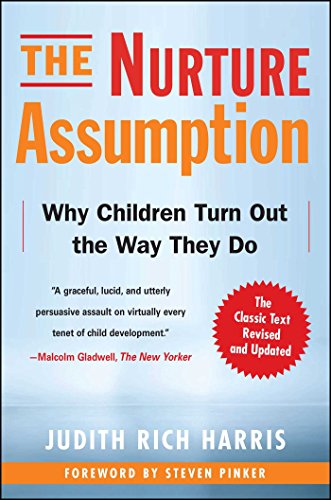
The second is peer groups. Judith Rich Harris made the controversial case in The Nurture Assumption that peer influence is a more powerful shaper of personality than parental influence, particularly from middle childhood onward. The friends your child makes, the social groups they belong to, the norms those groups enforce, these have measurable effects on personality development that persist into adulthood in ways that family dynamics often do not.
The third is unique individual experience, what researchers call the non-shared environment. Two siblings raised in the same household do not, in any meaningful sense, have the same environment. They have different teachers, different friendships, different moments of triumph and failure, different versions of their parents at different ages and life stages. The experiences that shape personality are largely the ones that are not shared with anyone else in the family, which is precisely why siblings raised together often turn out so differently. They were never in the same environment. They just lived in the same house.
None of this means birth order is entirely meaningless. It may subtly influence educational attainment, with firstborns showing a small but consistent advantage on some measures. It shapes family dynamics and how parents allocate resources and attention. It creates a relational context that is genuinely different for a firstborn than for a fourth child. But it does not reliably produce the personality types that Adler described, that Sulloway systematised, and that dinner party conversations have been asserting ever since.
I have three children. I have watched all three of them confound every birth order prediction I have ever heard. My eldest is not the responsible high-achiever the theory promised. My youngest is not especially charming or rebellious. They are themselves, stubbornly and completely, in ways that have very little to do with the order they arrived in.
Which, when I think about it, is exactly what the research would predict.
Parenting is the longest experiment any of us will ever run. I am still reading the results.
Lila Sjöberg
The research goes deeper than one article can cover. These books are worth your time.

Sources
- PMC / National Library of Medicine. Settling the Debate on Birth Order and Personality. Two 2015 large-scale studies, methodological critique, zero effect on Big Five traits.
- Big Think. What Hundreds of Studies Do Not Say About Birth Order and Personality. Family size confound, within-family vs outside-family ratings, demand effects.
- The Swaddle. Why the Myth That Birth Order Shapes Personality Just Will Not Die. Sulloway 1996, 2015 replications, peer influence and genetics as real drivers.