Last Updated on October 7, 2026 by Lila Sjöberg
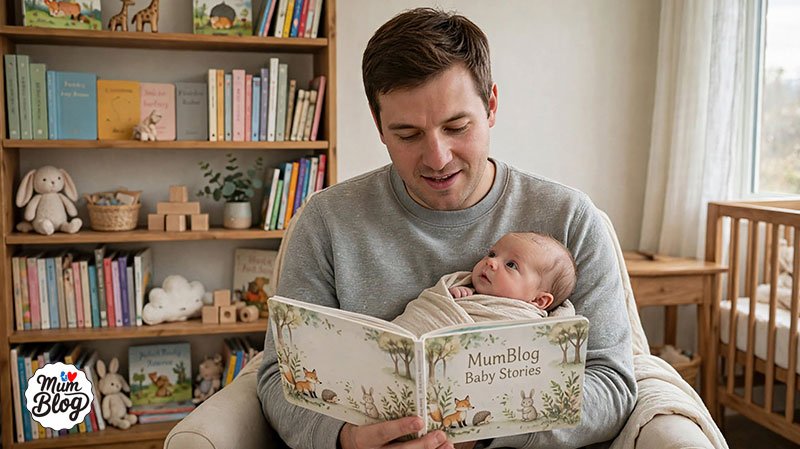
My youngest was three weeks old the first time I read to her. She could not focus her eyes beyond about twenty centimetres. She had no idea what words were. She had not yet discovered her own hands. I sat in the chair by the window and read to her anyway, a picture book about a bear who could not sleep, and she lay on my chest and listened to the sound of my voice doing something other than whispering or singing.
People sometimes asked why I bothered. She does not understand anything yet, they said. You might as well read to the wall.
They were wrong, and the neuroscience has been saying so for decades. The baby does not need to understand words for the words to change her brain. The process that will eventually produce language, literacy, and the ability to think in complex sentences begins long before a single word is comprehended. It begins, in fact, before birth.
Researchers at the University of Helsinki used magnetoencephalography to measure brain activity in newborns who had been exposed to specific speech sounds and melodies in the womb during the third trimester. The babies showed measurably stronger neural responses to the sounds they had heard prenatally than to sounds they had not heard. The brain was already learning before it had ever seen light. What reaches the fetus through the uterine wall is muffled, low-frequency, and largely stripped of meaning. But the rhythm of speech, the prosody, the rise and fall of language, the pattern of stressed and unstressed syllables, all of this enters and is processed. By the time a baby is born, they already recognise their mother’s voice and show a measurable preference for the language spoken around them over other languages. The prenatal period is not silence. It is a first classroom.
After birth, the pace accelerates. The human brain at birth has roughly 100 billion neurons, approximately the same number as an adult brain. What it does not have is connections. In the first three years of life, the brain forms synaptic connections at a rate of approximately one million per second. This is the period of maximum neural plasticity in a human life, the window during which the architecture of language, cognition and emotional regulation is being laid down. What happens during this window does not determine everything. But it shapes the infrastructure everything else will later run on.
Reading aloud contributes to this architecture in ways that are specific and measurable. A 2019 study using fMRI imaging scanned the brains of children between three and five years old while they listened to age-appropriate stories. Children who had been read to frequently at home showed significantly greater activation in the left temporoparietal cortex, the region associated with language comprehension and narrative processing, than children with less reading exposure. The differences were visible in the brain scans. The reading had left a physical trace.
The mechanism involves several overlapping processes. The first is vocabulary. Children who are read to regularly are exposed to a far wider range of words than children who are not. The vocabulary in picture books is, on average, richer than the vocabulary in adult conversation: picture books contain words that rarely appear in everyday speech, and those words land in a brain that is in peak acquisition mode. Every unfamiliar word is not yet understood but is registered, stored, and begins to acquire meaning through repeated exposure. Long before a child can define a word, they have a sense of it, a neural trace that repeated encounters will eventually sharpen into comprehension.
The second process is prosody and phonological awareness. When a parent reads aloud, the baby hears the music of language before they hear its meaning. The rhythm, the rhyme, the pattern of sounds, train the auditory processing system to detect the building blocks from which words are constructed. Phonological awareness, the ability to hear and manipulate the sound units of language, is one of the strongest predictors of reading ability later in childhood. It develops through exposure to spoken language long before reading instruction begins, and reading aloud, with its natural emphasis on rhythm and sound, is one of the most effective ways to build it.
The third process is joint attention. When a parent reads to a baby or toddler, they are doing something that matters beyond the book itself. They are directing attention together toward a shared object, pointing at pictures, naming things, responding to the child’s reactions, building the capacity for shared focus that underlies all social learning. Joint attention is the scaffold on which language acquisition hangs. Children who have extensive experience of joint attention with caregivers learn language faster, because they have more practice with the fundamental act of knowing that an adult is pointing their attention at something and that that something has a name.
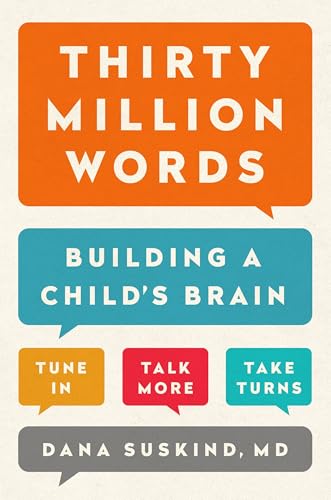
The thirty million words research, named for the estimated gap in words heard by children from lower and higher socioeconomic backgrounds by age three, showed that the quantity and quality of language directed at a child in the first years of life predicts vocabulary size, school readiness, and academic achievement with striking consistency. Reading aloud is not the only way to close this gap, but it is one of the most efficient, because it combines high vocabulary exposure, prosodic richness, joint attention, and emotional connection in a single activity that takes fifteen minutes and costs nothing beyond the book. It is the highest-return activity available to a parent of a young child, measured purely in neurological terms.
None of this requires the child to understand the story. The three-week-old on my chest was not following the plot of the bear who could not sleep. She was receiving sound, rhythm, proximity, warmth, and the particular quality of attention that comes when someone is reading aloud and fully present. Her brain was processing all of it in ways I could not see and she could not communicate. The understanding came later. The foundation was being laid right then.
Read to them before they understand. The understanding is what the reading builds toward. But the building starts immediately, from the very first page, however little they appear to be listening.
They are listening. Every word is going somewhere.
Parenting is the longest experiment any of us will ever run. I am still reading the results.
Lila Sjoberg
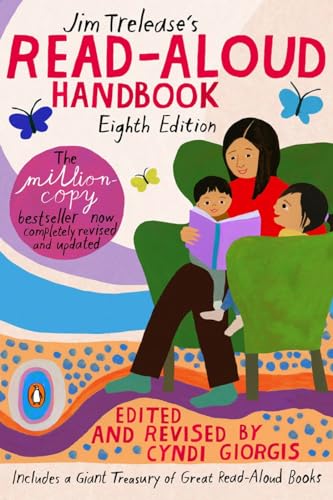
The research goes deeper than one article can cover. These books are worth your time.
Sources
- American Academy of Pediatrics. Literacy Promotion: An Essential Component of Primary Care Pediatric Practice. Reading aloud from birth, vocabulary gap, brain development evidence.
- Cincinnati Children’s Hospital. Brain Imaging Study of Reading Aloud. fMRI results, left temporoparietal cortex activation, frequency of home reading.
- University of Helsinki. Babies Begin Learning Language in the Womb. Magnetoencephalography study, prenatal sound exposure, newborn language preference.