Last Updated on October 8, 2026 by Lila Sjöberg
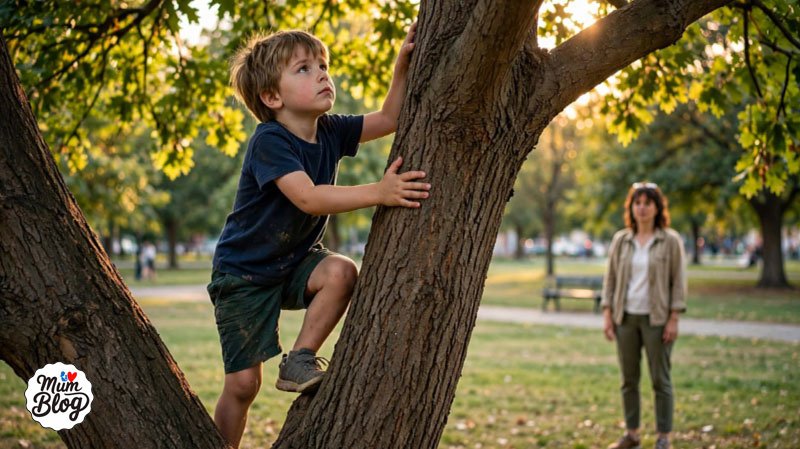
The words come out before you even think about them. Your child moves toward something that looks risky and you say it automatically: be careful. It is the most natural thing in the world. You love them. You want them safe. The phrase costs nothing and takes half a second and feels like responsible parenting.
The problem is that it does not work. And the research suggests it may be doing the opposite of what you intend.
When a child hears “be careful” in the middle of a physical challenge, what they receive is not useful safety information. They receive a signal that you do not trust their body or their judgment. They learn that the environment around them is more dangerous than they can handle. And they begin to take fewer risks, not because they have learned to assess risk better, but because they have learned that risk is something adults are afraid of. The skill they needed to develop, the ability to read a situation and decide what they can manage, gets bypassed entirely.
Ellen Sandseter, a Norwegian professor of early childhood education, spent years studying children at play in environments that would make most Western parents reach for their phones. Her research, published across multiple studies and summarised in her work on risky play, identified six categories of risk that children are naturally drawn to: heights, speed, dangerous tools, dangerous elements like fire and water, rough-and-tumble play, and the experience of getting lost or wandering away. Her finding was not that these activities were dangerous. Her finding was that they are necessary. Children who engage in risky play develop better risk assessment, greater physical confidence, and lower rates of anxiety. The risk, it turns out, is the point.
The mechanism is straightforward once you understand it. Risk tolerance is a learned skill, and like all learned skills it develops through practice. A child who climbs trees learns, through small falls and near-misses and successful ascents, exactly what their body can do. They develop what researchers call proprioception and physical self-efficacy: an accurate internal map of their own capabilities. A child who is steered away from climbs, whose every attempt at challenge is met with adult alarm, does not develop that map. When they eventually encounter genuine risk, as every person does, they have no calibrated sense of what they can handle.
This is why playgrounds have become less effective at what playgrounds are supposed to do. The systematic removal of tall slides, high swings, climbing structures with genuine height, and any equipment that might generate an insurance claim has not produced safer children. It has produced children who are less capable of managing their bodies, less experienced with the physical sensation of mild danger, and more likely to be injured when they encounter risk in environments without rubber safety surfaces beneath them.
A landmark study by the British organisation Play England found that children who had access to adventurous outdoor play showed measurably better physical coordination, better social negotiation skills, and greater resilience under stress than children whose play was primarily supervised and structured. The authors noted that the controlled, low-risk play environments increasingly common in the UK and elsewhere were not neutral. They were actively removing the developmental inputs children need. Safe playgrounds, the report concluded, were producing unsafe adults.
The issue with “be careful” specifically is what it replaces. When a parent says “be careful” to a child on a climbing frame, they are not giving the child any information they can use. The child does not know what to be careful of, or how, or why. What would actually help is specific, actionable language: that branch looks thinner than the one below it. Your left foot needs to find something solid before you move your right hand. Look where your weight is going. These instructions teach the child to pay attention to the right things. “Be careful” teaches them only that you are watching and worried.
Peter Gray, a research professor at Boston College who has spent decades studying children’s play, argues that the decline of unsupervised free play over the past fifty years tracks almost exactly with the rise in childhood anxiety and depression. His thesis is not that play is nice to have. His thesis is that risky, self-directed play is how children develop the psychological immune system that allows them to function as adults. Remove the play and you remove the training ground. The anxiety that follows is not a symptom of something else. It is the predictable result of a generation that was never given the chance to discover what it could survive.
None of this means you should stop watching your children or stop caring whether they get hurt. It means the goal shifts. Instead of preventing all risk, the goal is to expose children to age-appropriate risk regularly enough that they develop genuine competence. A child who has fallen out of a tree at a manageable height and gotten back up has learned something no amount of careful parenting can teach them. They have learned that they can fall, and get up, and be fine. That knowledge is not trivial. It is the foundation of every form of resilience they will ever need.
Next time your child is doing something that makes your chest tighten, try saying nothing. Watch them. Let them feel the edge of what they can do. If they make it, they have learned something. If they stumble, help them up and let them try again.
That is not negligence. That is how competence is built.
Parenting is the longest experiment any of us will ever run. I am still reading the results.
Lila Sjoberg
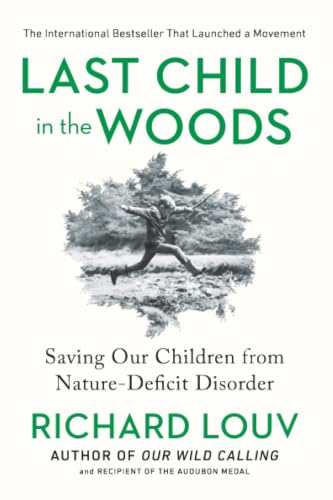
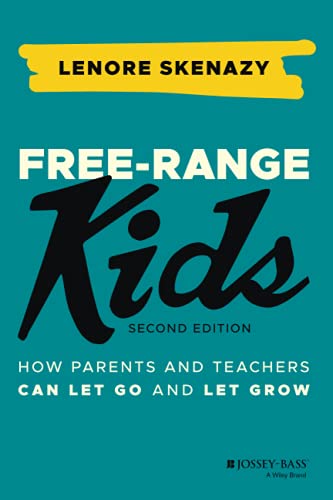
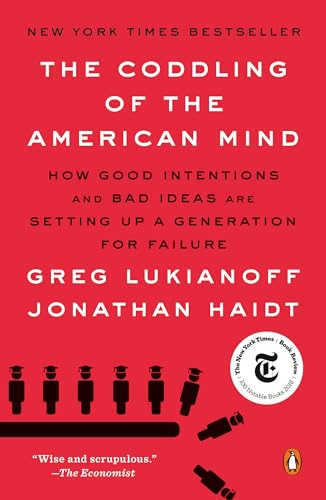
The research goes deeper than one article can cover. These books are worth your time.
Sources
- Sandseter, E.B.H. Affordances for Risky Play in Preschool. Early Childhood Education Journal, 2009. Six categories of risky play, developmental outcomes, risk assessment in young children.
- Play England. Growing Up: Managing Risk and Real Adventures. Physical coordination, social resilience, adventurous outdoor play outcomes.
- Gray, Peter. Children’s Declining Freedom to Play. Psychology Today. Decline of unsupervised play, rise of childhood anxiety, psychological development through risk.