Last Updated on January 21, 2026 by Lila Sjöberg
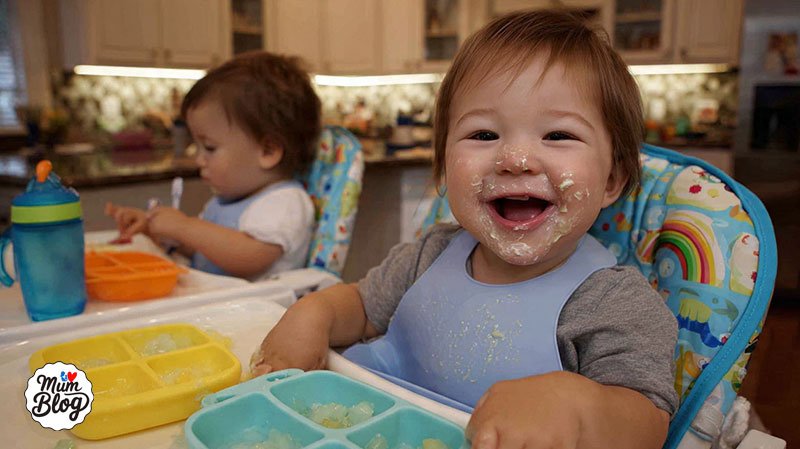
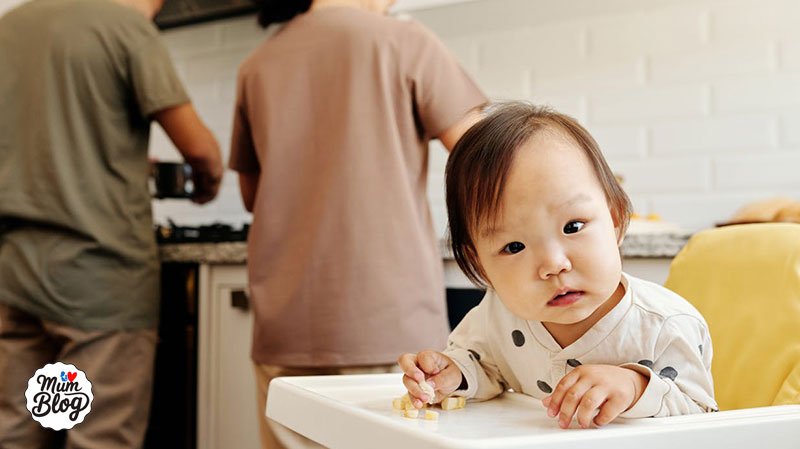
There’s a moment in every parent’s life when you look around your kitchen and realize: everything is covered in sweet potato. The walls. The floor. The dog. Somehow, the ceiling. Your child, who received approximately two tablespoons of food, has managed to distribute it across every surface within a six-foot radius. Welcome to feeding a toddler. 😅
The right gear won’t prevent mess entirely — let’s be realistic about the laws of physics and toddler determination — but it can contain the chaos somewhat and make cleanup less of a full-contact sport. Here’s what actually helps versus what’s just cute on Instagram.
Key Takeaways
Suction plates and bowls genuinely reduce floor-food incidents, but not all suctions are created equal — look for strong ones. Silicone bibs with pockets catch significant amounts of dropped food and wipe clean in seconds. High chairs with minimal crevices save hours of cleaning time over ones with fabric padding. Invest in a good splat mat for under the high chair — your floor will thank you. Simple, functional gear beats cute complicated stuff every time.
The Short Answer: The best feeding gear for messy eaters includes strong suction plates, silicone pocket bibs, easy-clean high chairs with few crevices, a splat mat for floor protection, and soft-tipped spoons. Prioritize easy cleaning over aesthetics — you’ll be washing this stuff multiple times daily.
Let’s break down what’s worth buying and what you can skip.
High Chairs: The Foundation of Containment
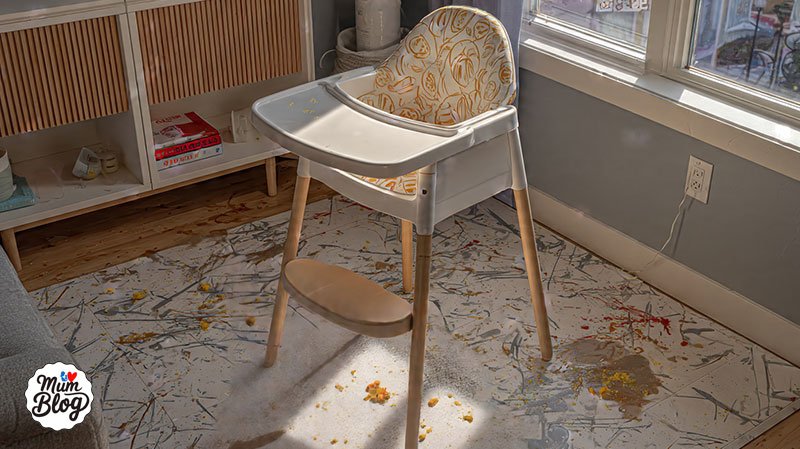
Your high chair choice affects your sanity more than almost any other baby purchase. The adorable fabric-padded one with seventeen crevices? A biohazard within weeks. Food gets into places you didn’t know existed, and the fabric develops smells that haunt your dreams.
Look for high chairs with smooth plastic or wipeable surfaces, minimal seams and gaps, and straps that detach for washing. The ability to remove the tray one-handed is surprisingly important when you’re holding a yogurt-covered child with the other arm. Some parents swear by simple IKEA-style chairs; others prefer full-featured ones with adjustable everything. Both work — the key is cleanability.
If you already own a crevice-nightmare chair, all is not lost. Removable covers that can be machine washed help. So does accepting that some things will never be fully clean and focusing your energy elsewhere.
Suction Bowls and Plates: The Great Debate
In theory, suction bowls stick to the tray and prevent your toddler from launching their pasta across the room. In practice, many toddlers view this as a delightful challenge. That said, a good suction can buy you valuable seconds of eating time before the inevitable yeet.
The key is suction strength. Cheap suctions pop off with minimal effort; strong ones require adult hands to remove. Look for wide suction bases and one-piece designs where the suction is integrated, not stuck on. Some brands work better than others — read reviews from actual parents of actual toddlers, not sponsored influencer content.
Divided plates help with portion presentation and keeping foods from touching (a crisis for some kids), but they’re not essential. A regular suction bowl works fine for most meals. Don’t overbuy — you need maybe 2-3 that rotate through dishwasher cycles.
Bibs: Your First Line of Defense
Fabric bibs are fine for little spit-up situations. Once solids enter the picture, silicone bibs with a catching pocket become essential. That pocket catches an astounding amount of food that would otherwise end up on clothes, lap, and floor. Some meals, the pocket collects more food than actually reaches the mouth — but hey, at least it’s contained.
Silicone bibs wipe clean in seconds, go in the dishwasher, and last forever. The crumb-catching pocket is non-negotiable. Adjustable neck closures work better than fixed sizes as your baby grows.
Long-sleeve smock bibs exist for truly messy situations — spaghetti night, self-feeding experiments, anything with berries. They’re more laundry, but they save outfits. Some parents go full coverall for meals; others accept that food-stained clothes are just the toddler aesthetic now.
Utensils: What Actually Works
Baby and toddler utensils come in approximately eight thousand varieties. Here’s what matters: soft tips that won’t hurt gums, chunky handles small hands can grip, and a design that actually functions for scooping or spearing food.
Early self-feeding works best with pre-loaded spoons — you load the spoon, baby brings it to mouth, everyone feels accomplished. As skills develop, utensils with shorter, wider handles give better control. Forks with rounded tines prevent injuries while still allowing actual food-spearing.
Skip the gimmicky stuff. Spoons that change color with temperature are cute but unnecessary. Character-themed utensils might be motivating for some kids, but basic functional ones work just as well. Save the money for the truly useful things.
Cups and Drinking Gear
The sippy cup industrial complex wants you to believe you need seventeen different cup types. In reality, you need something that doesn’t spill when thrown, allows your child to actually drink, and is dishwasher safe. That’s it.
Straw cups work well for many toddlers and encourage good oral motor development. 360 cups let kids drink from any edge and minimize spills. Traditional sippy cups with spouts work but are being phased out by some speech pathologists who prefer straws or open cups.
Whatever type you choose, get duplicates. Cups disappear into the couch, the car, under the crib. Having backups prevents meltdowns (yours and theirs) when the favorite cup is MIA.
For more on feeding essentials, our stress-free feeding guide has additional recommendations.
The Splat Mat Situation
Whatever falls from the high chair will create a mess. A splat mat — basically a large wipeable surface under the eating area — contains that mess and protects your floor. This is especially important if you have carpet, rugs, or floors that stain.
Silicone mats are durable and easy to clean. Plastic ones work but can crack over time. Some people use cheap shower curtains or tablecloths — functional if not beautiful. Whatever you choose, make sure it’s big enough to catch the typical splatter radius, which is larger than you’d expect.
Some parents skip the mat entirely and just accept floor mess, especially if they have dogs who “clean” fallen food. No judgment — do what works for your household and sanity level.
What You Can Skip
The baby gear industry is very good at convincing us we need things. Here’s what’s probably unnecessary: elaborate food prep gadgets (a fork mashes most things fine), warming bowls (room temperature food is fine), special “toddler food storage” (regular containers work), cute but non-functional plates (style points don’t matter when everything ends up on the floor).
Also skippable: buying everything in matching sets. You’ll lose pieces, develop preferences, and end up with a mismatched collection anyway. Start with basics, see what works for your specific kid, then add as needed.
Cleaning and Maintenance Reality
All feeding gear needs frequent washing. Choose items that are genuinely dishwasher safe, not just “top rack dishwasher safe sometimes maybe.” Hand-washing gets old fast when you’re already drowning in dishes.
Silicone items can develop a film or smell over time. Occasional soaks in baking soda water or a vinegar rinse helps. Suction plates need to be fully dry before they stick well again.
Accept that nothing stays pristine. That beautiful white high chair will have permanent tomato sauce shadows. The cute plates will get scratched. Functional and clean-ish is the goal, not showroom perfect.
Frequently Asked Questions
What age do kids stop needing all this special gear?
It varies, but most kids transition to regular plates and utensils between 2-4 years. Suction plates can go earlier when they stop throwing everything; special bibs phase out as eating gets neater. Let your child’s skills and mess level guide the transition.
Is expensive feeding gear worth it?
Sometimes. Higher-quality suction and silicone items tend to last longer and work better. But plenty of budget options are perfectly functional. Read reviews, buy one to test before committing to a set, and don’t assume expensive means best.
My baby pulls off every suction plate. Help?
Some kids are just determined. Make sure the surface is clean and dry before attaching, press firmly to create good suction, and accept that some meals will be bowl-free. You can also serve directly on the tray — one less thing to throw.
How many of each item do I actually need?
Roughly: 2-3 suction plates/bowls, 3-4 bibs (so some can be dirty while others are in use), 4+ utensils (they fall and get lost), 2-3 cups. Enough to rotate through dishwasher cycles without running out. Adjust based on how often you wash dishes.
Embrace the Chaos
No gear in the world will make feeding a toddler a clean experience. The mess is part of the developmental process — self-feeding is how they learn, and learning is messy. The right equipment just makes the cleanup marginally less terrible.
Focus on functional, easy-clean basics. Skip the trendy stuff that looks good but doesn’t work. And remember: this phase doesn’t last forever. Eventually they’ll eat like humans and the splash zone will shrink. Until then, pass the wipes.
You’ve got this, mama. Sweet potato ceiling and all! 😅
Lila.