Last Updated on June 9, 2026 by Lila Sjöberg

Sunday evenings used to fill me with dread. The week ahead loomed as an undifferentiated mass of obligations, activities, meals to plan, things to remember. I would lie in bed running through mental lists, sure I was forgetting something crucial. Then I discovered the power of a simple weekly planning practice, and everything changed. Not because the weeks became less full, but because I could see them clearly, prepare for them intentionally, and stop carrying everything in my anxious brain. Let me show you what works.
Key Takeaways
Weekly planning reduces overwhelm by getting everything out of your head and onto paper where you can actually see and manage it — the mental load becomes concrete and therefore less terrifying. Planning is not about controlling every moment but about identifying priorities and potential problems before they become crises. A simple, sustainable system you actually use beats an elaborate one you abandon — the best planner is one that fits your life. The weekly review is as important as the weekly plan; reflecting on what worked and what did not improves future weeks.
The Short Answer







Plan your week by doing a brief weekly preview (30 minutes or less), identifying must-dos versus nice-to-dos, time-blocking priorities, preparing for known challenges, and keeping a running list for capturing things as they arise.
The Brain Dump Foundation
Before you can plan, you need to see everything. All the appointments, tasks, obligations, ideas, worries — everything that is taking up mental space needs to come out of your head and onto paper.
I start each weekly planning session with a brain dump. Set a timer for ten minutes and write everything you can think of that relates to the coming week. Do not organise, do not prioritise, just dump. Appointments, tasks, groceries needed, things to remember, people to contact, projects to work on, worries about the week.
The brain dump alone reduces anxiety. Suddenly the amorphous cloud of things to do becomes a finite list. It might be a long list, but at least you can see it.
The Weekly Preview
With your brain dump complete, look at the week ahead. What is already scheduled? What constraints exist? What days are fuller than others?
I use a simple paper layout showing each day of the week. I start by transferring anything already committed — appointments, school events, regular activities. This shows me where time already belongs to specific obligations.
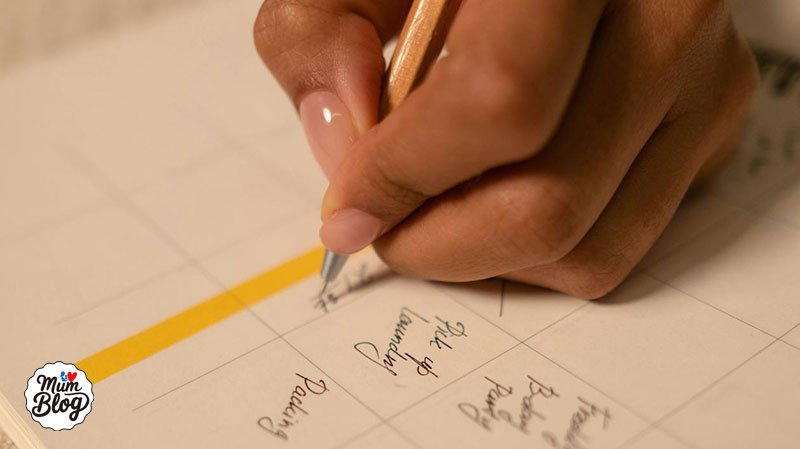
Then I look at what is left. Where are the open spaces? Which days are packed? Where can I fit the priorities from my brain dump? Matching tasks to available time slots prevents overcommitting days that are already full.
Priorities First
Not everything on your brain dump is equally important. Some things are urgent and important, some are important but not urgent, some are urgent but not important, and some are neither.
I mark my brain dump items: must happen this week (starred), should happen if possible (circled), and would be nice (unmarked). The starred items get scheduled first into specific time blocks. The circled items get assigned to days if time exists. The unmarked items might happen or might carry forward; they do not drive the week.
This prevents the common trap of filling your week with easy, unimportant tasks while important things get perpetually postponed.
The Meals and Logistics Layer
Meals deserve their own planning attention because they happen daily and require forethought. Deciding at 5 PM what is for dinner while hungry children circle is a recipe for stress.
During weekly planning, I sketch out dinners for each night, checking what we have versus what we need. Not elaborate meal planning — just knowing the answer to what is for dinner? before the question arises. Our toddler meals guide has ideas for simple family dinners.
Other logistics get similar attention: what needs to go to school, what forms need signing, what supplies are running low, what needs to be coordinated with your partner.
Anticipating Challenges
Good planning is not just about what you will do but about what might go wrong. Which days look overscheduled? Where are the pinch points? What typically causes problems that you could prepare for?
If Wednesday is packed, can you prepare meals ahead? If Thursday has back-to-back commitments, can you prep outfits and bags the night before? If Friday always feels chaotic, what could you do earlier in the week to ease it?
This is not about controlling the uncontrollable. It is about handling the predictable so you have capacity for the unpredictable.
The Running Capture
Your weekly plan will not capture everything. Things come up. Ideas occur. New tasks appear.
Have a single place to capture these throughout the week. For me, it is a small notebook I carry everywhere. Others use phone apps or voice memos. The format does not matter; having ONE place matters. No more scattered notes and forgotten thoughts.
Whatever gets captured during the week gets processed in the next weekly planning session. Nothing is lost; nothing is forgotten.
The Weekly Review
At the end of each week (or start of the next), take five minutes to review: What got done? What did not? Why? What do I want to do differently next week?
This review is where learning happens. You start to notice patterns: I always overcommit Tuesdays. I consistently underestimate how long errands take. Planning works better when I do it Sunday morning rather than Sunday night.
Without review, you make the same planning mistakes repeatedly. With review, each week’s plan improves.
Weekly Planning FAQ
How long should weekly planning take?
Thirty minutes or less once you have a system. The first few times might take longer as you figure out what works. If it is taking hours, you are overcomplicating it.
What if my week never goes according to plan?
Plans are not predictions; they are intentions. Flexibility is built in. The value is in thinking through the week, not in following the plan perfectly. When things shift, adjust. The plan gives you a starting point to adapt from.
Paper or digital planner?
Whatever you will actually use. Many people find paper more satisfying and less distracting. Digital offers reminders and portability. Some use both — digital calendar for appointments, paper for weekly planning. Experiment to find your preference.
My partner does not plan. How do we coordinate?
At minimum, share a family calendar for appointments and commitments. Better: a brief weekly check-in where you review the upcoming week together. Best: collaborative planning where both partners contribute to household and family logistics.
Start Simple
If weekly planning feels overwhelming, start with just two things: brain dump and time-blocking your top three priorities. That alone is transformative. Add other elements as the basic practice becomes habit.
The goal is not elaborate planning. The goal is enough clarity that you face the week with intention rather than dread. Enough visibility that things stop falling through cracks. Enough structure that you feel in control rather than controlled by circumstances.
You can do this. Thirty minutes once a week changes everything. 👍
Do you have a weekly planning practice? What does it look like? I am always curious how others approach this — we all have different systems that work for our lives.
Lila.